
𝗞𝘂𝘄𝗲𝗻𝘁𝗼𝗻𝗴 𝗣𝗲𝘆𝘂𝗽𝘀 𝗔𝘁𝗯𝗽. 𝗯𝘆 𝗔𝘁𝘁𝘆. 𝗗𝗲𝗻𝗻𝗶𝘀 𝗚𝗼𝗿𝗲𝗰𝗵𝗼
Dance has always played a significant role in human culture, acting as a universal language that transcends borders, languages, and time whether as a form of storytelling, a means of worship, or simply a way to celebrate life.
National Artist for Dance Alice Reyes said in an interview that dance is a form of communication as a dancer uses his or her body to express a thought, a feeling, or a belief.
“It can be entertaining; it can be a bit on the more serious side. But it is a viewpoint that I think is very important in the same way that a painting is a viewpoint and says something. Music does the same, film does the same. The only difference is that the dancer uses his body, that’s his/her medium,” Reyes said.
In 2014, Reyes joined the ranks of National Artist for Dance along with Francisca Reyes-Aquino (1973), Leonor Orosa Goquingco (1976), Lucrecia Reyes-Urtula (1988), Ramon Obusan (2006), and Alice Reyes (2014) and Agnes Locsin (2022).
Reyes-Aquino, Obusan, and Locsin are from the University of the Philippines.
The National Commission for Culture and the Arts (NCCA) noted that “perhaps the biggest contribution of Alice Reyes to Philippine dance is the development of a distinctly Filipino modern dance idiom, utilizing inherently Filipino materials and subject matters expressed through a combination of movements and styles from Philippine indigenous dance, modern dance and classical ballet. She has successfully created a contemporary dance language that is uniquely Filipino.”
“You have to be passionate to do it. And if you have that passion, go for it. To be able to express yourself with your body, with your creative mind is such an opening of life to you as an individual. And so, I say, take risks. Try to do as much as you can. Open up your mind, and just go for it,” Reyes said.
Weeks before the COVID19 lockdown, I saw the CCP Ballet Philippines dance concert last February 2020 that featured many of Reyes’ famous works, including “Itim Asu”, which is based on the three ritual scenes from Virginia Moreno’s award-winning play the “Onyx Wolf” with music by National Artist for Music Antonino Buenaventura.
The story centers around Governor-General Bustamante’s wife, Luisa, who seeks revenge after her husband was assassinated in 1719 by a hooded mob in the Residencia in Intramuros for carrying out the Royal Orders to stop the Galleon Trade corruptions by religious and influential people.
The Alice Reyes Dance Philippines (ARDP) continues to evolve as a force in Filipino dance, bridging the timeless and the contemporary, the classical and the cutting-edge.
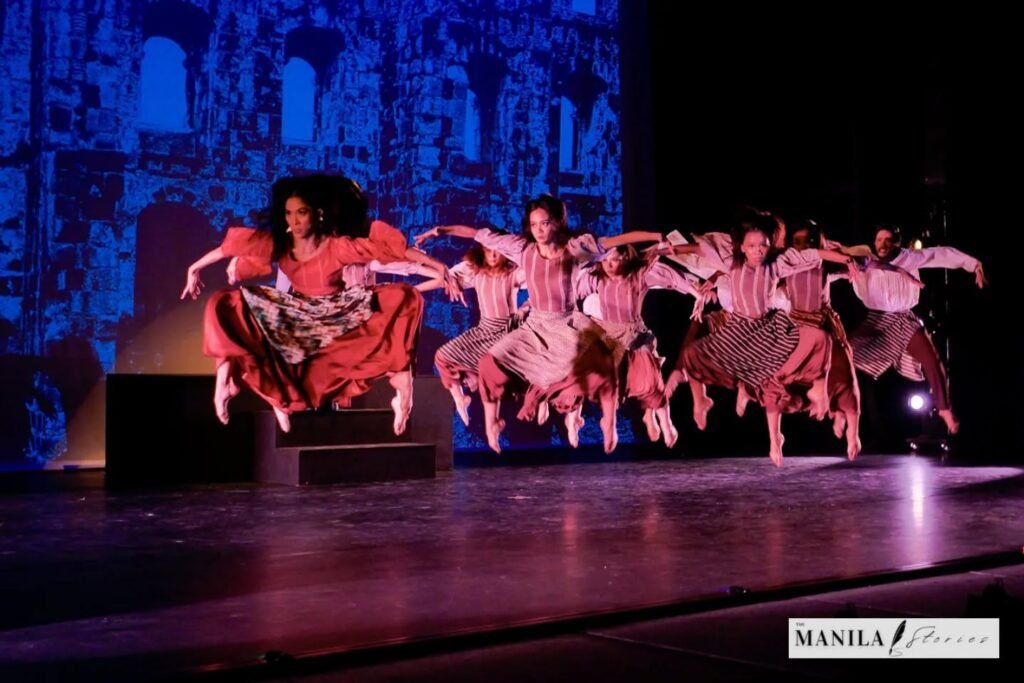
ARDP recently presented “PAGDIRIWANG: Sayaw Alay Sa Sining”, which brought together choreographic brilliance featuring works from some of the most iconic names in dance, including Reyes herself.
PAGDIRIWANG featured seven dances namely : “Amada”, a Filipino modern dance by Alice Reyes music by National Artist for Music, Lucrecia Kasilag; “Songs of Wayfarer”, a modern dance by Norman Walker and music by Gustav Mahler; “Muybridge/Frames”, a contemporary dance by Denisa Reyes; “C’est La Cie”, a neoclassical dance by Augustus Damian III; “Glinka’s Valse”, classical ballet by Adam Sage and music by Mikhail Glinka; “Nocturne”, contemporary dance by Carlo AC Pacis; and “Moon”, a contemporary dance by Kun-Yang Lin and music by Dead Can Dance.
“Amada” is based on Nick Joaquin’s “Summer Solstice” that explores the tension between traditional male dominance and rising female power in 19th-century Philippines. It utilized the “Tadtarin”, a “women subjugate men” ritual during the summer solstice where women suddenly reign supreme while dark frenzied ceremonies celebrate “death and resurrection”.
“Moon” pays homage to the omniscient deities through a meditative yet vibrant dance of supplication. The endless cycles of the moon encompass beginnings and endings, meetings and partings.
“Muybridge/Frames,” inspired by British photographer Eadweard Muybridge’s motion studies, uses male dancers to create a progression of movements, mimicking the multiple-image effect in photography.
“Songs of Wayfarer” tells the story of a man processing grief after being abandoned by his beloved.
Dance is often described as a universal language that communicates emotions, stories, and ideas without the need for words.
Just as writers use sentences and painters use brushstrokes, dancers use their bodies as the medium to communicate their artistic vision.
Dance is much more than just a form of entertainment; it’s a powerful expression of culture, spirituality, and community.
Dance allows individuals to convey a wide range of emotions, from joy and excitement to sadness and anger, without relying on spoken word
Dance is a powerful art form that allows for the expression of emotions, stories, and ideas through movement, often considered a universal language that transcends words.
(𝑃𝑒𝑦𝑢𝑝𝑠 𝑖𝑠 𝑡ℎ𝑒 𝑚𝑜𝑛𝑖𝑘𝑒𝑟 𝑜𝑓 𝑡ℎ𝑒 𝑈𝑛𝑖𝑣𝑒𝑟𝑠𝑖𝑡𝑦 𝑜𝑓 𝑡ℎ𝑒 𝑃ℎ𝑖𝑙𝑖𝑝𝑝𝑖𝑛𝑒𝑠. 𝐴𝑡𝑡𝑦. 𝐷𝑒𝑛𝑛𝑖𝑠 𝑅. 𝐺𝑜𝑟𝑒𝑐ℎ𝑜 𝑖𝑠 𝑡ℎ𝑒 𝑗𝑢𝑛𝑖𝑜𝑟 𝑝𝑎𝑟𝑡𝑛𝑒𝑟 𝑤ℎ𝑜 ℎ𝑒𝑎𝑑𝑠 𝑡ℎ𝑒 𝑆𝑒𝑎𝑓𝑎𝑟𝑒𝑟𝑠’ 𝐷𝑖𝑣𝑖𝑠𝑖𝑜𝑛 𝑜𝑓 𝑡ℎ𝑒 𝑆𝑎𝑝𝑎𝑙𝑜 𝑉𝑒𝑙𝑒𝑧 𝐵𝑢𝑛𝑑𝑎𝑛𝑔 𝐵𝑢𝑙𝑖𝑙𝑎𝑛 𝐿𝑎𝑤 𝑂𝑓𝑓𝑖𝑐𝑒𝑠. 𝐹𝑜𝑟 𝑐𝑜𝑚𝑚𝑒𝑛𝑡𝑠, 𝑒-𝑚𝑎𝑖𝑙 𝑖𝑛𝑓𝑜@𝑠𝑎𝑝𝑎𝑙𝑜𝑣𝑒𝑙𝑒𝑧.𝑐𝑜𝑚, 𝑜𝑟 𝑐𝑎𝑙𝑙 0908866578).