



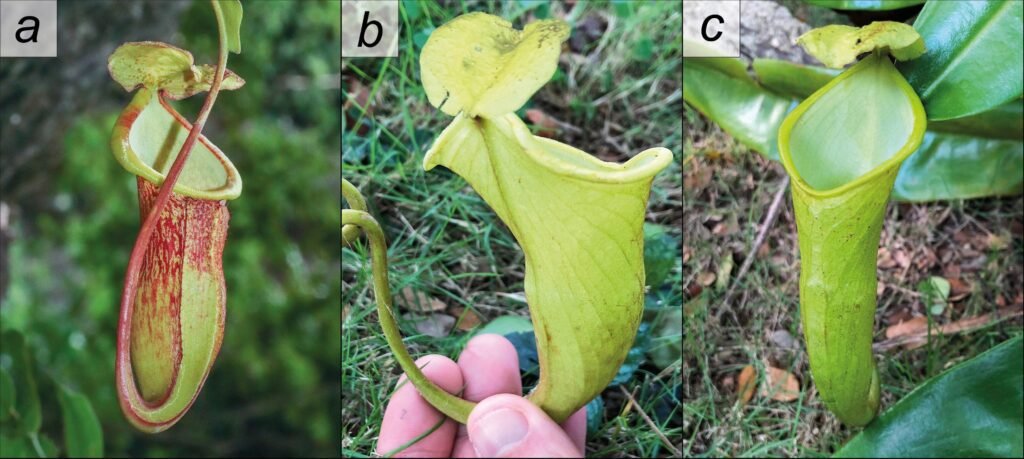
Philippine scientists, together with an Australian expert, have confirmed a new species of pitcher plant found only on Palawan Island—but warn it is already at serious risk due to climate change and human activity.
Named Nepenthes megastoma (“large mouth”), this carnivorous vine traps insects in its distinctive cup-shaped pitchers. It grows in just three steep and rocky locations within Puerto Princesa Subterranean River National Park. Despite thriving in these harsh, inaccessible cliffs, the plant faces threats from poaching, deforestation, and increasingly severe weather.
Researchers first spotted the plant in 2013 but initially misidentified it as N. campanulata from Borneo. Detailed fieldwork, drone surveys, and close examination later confirmed it as a new Philippine species. The plant’s unique adaptations include upward-pointing female flowers for vertical pollination, a fuzzy coating for water collection, and seasonally changing pitcher shapes to help retain water.
Despite these adaptations, only about 19 mature clumps and 12 non-flowering plants have been documented, making N. megastoma critically endangered under IUCN guidelines. Its limited population is highly vulnerable to typhoons, droughts, and illegal collection—some specimens are reportedly already being sold in Metro Manila.
“This plant’s precarious existence highlights both the richness and fragility of Philippine biodiversity,” said researcher John Charles Altomonte.
The discovery and study of Nepenthes megastoma were published in November 2025 in Phytotaxa* by Altomonte, Collantes, Mangussad, Bustamante, and Robinson.