

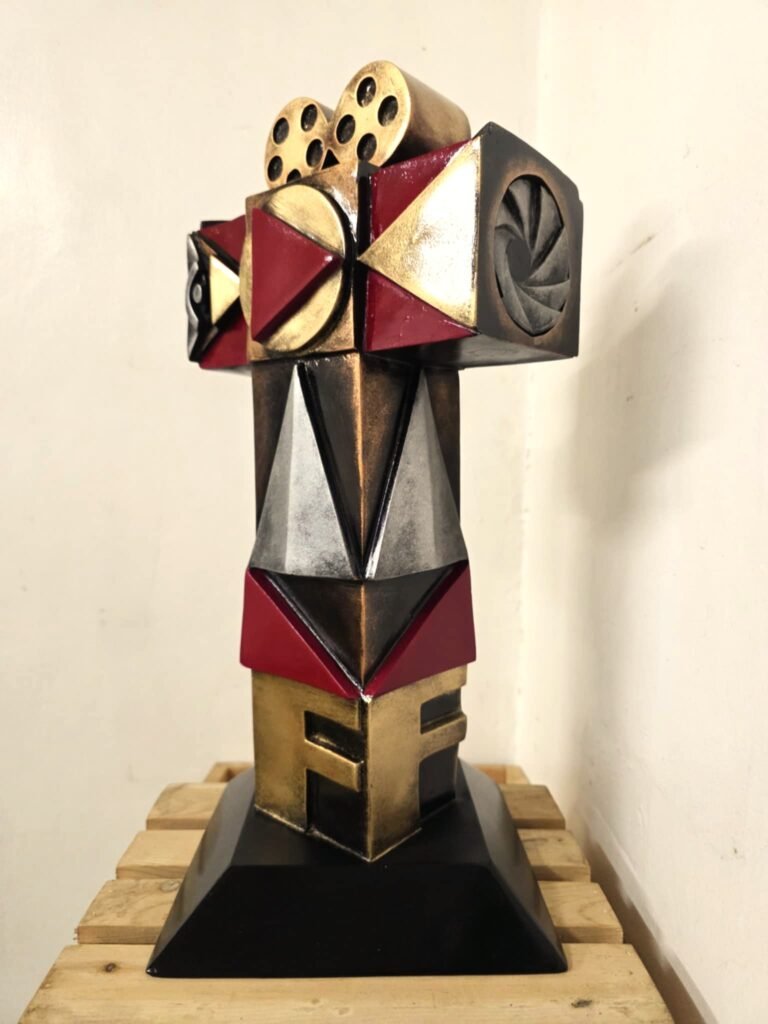
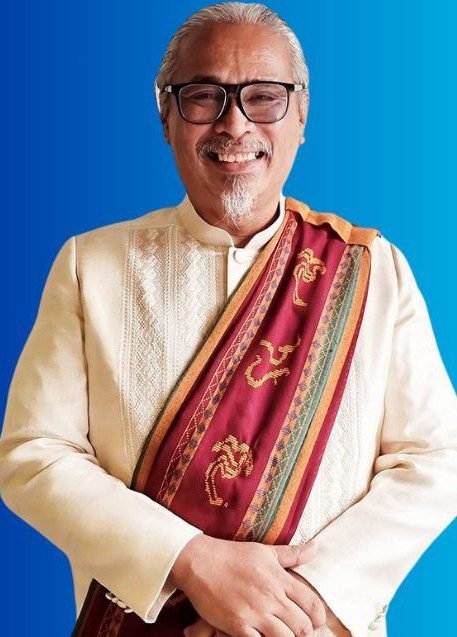
For the 51st year of the Metro Manila Film Festival (MMFF), the Gawad Parangal trophy takes on a deeper, more reflective form—one shaped by National Commission for Culture and the Arts (NCCA) Thirteen Artists Awardee and TOYM honoree Abdulmari ‘TOYM’ de Leon Imao, Jr. Tasked to design the MMFF 2025 trophy, Imao approached the project not merely as an object of recognition, but as a powerful meditation on the role of cinema in society.
Titled “Tatangnan,” the trophy’s design is rooted in the belief that film, like art, is both a tool for reflection and an instrument for action. The concept draws inspiration from two towering figures who viewed art as a force for critical thought and social change: German playwright and theorist Bertolt Brecht, and National Artist for Film Marilou Diaz-Abaya.
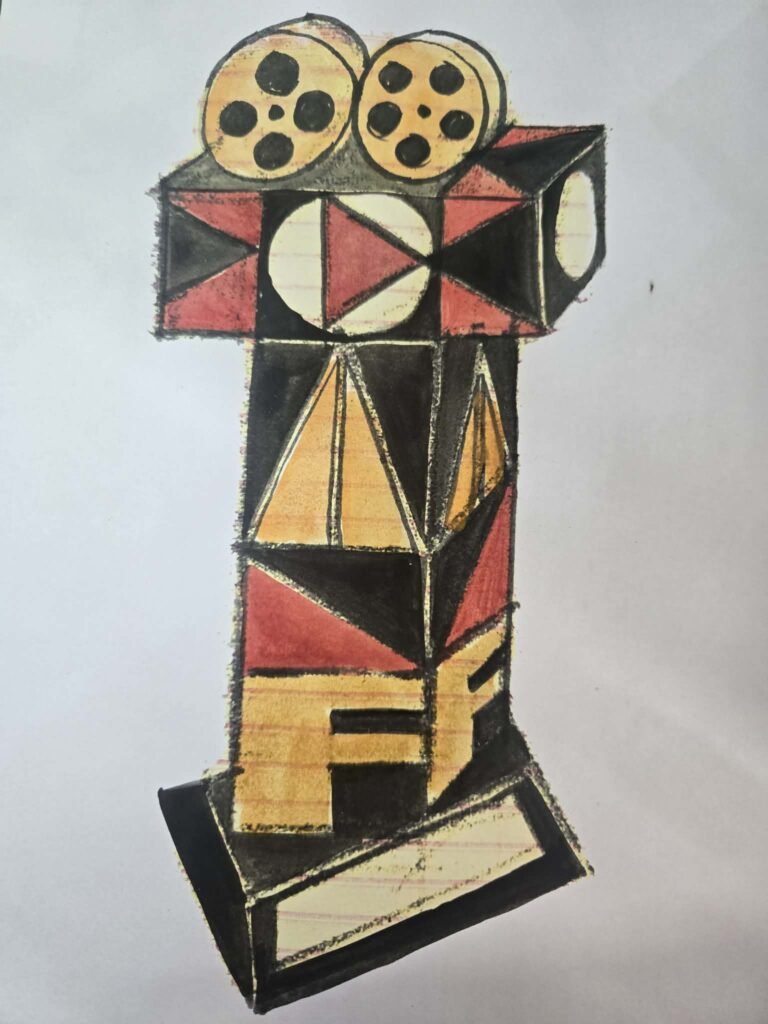
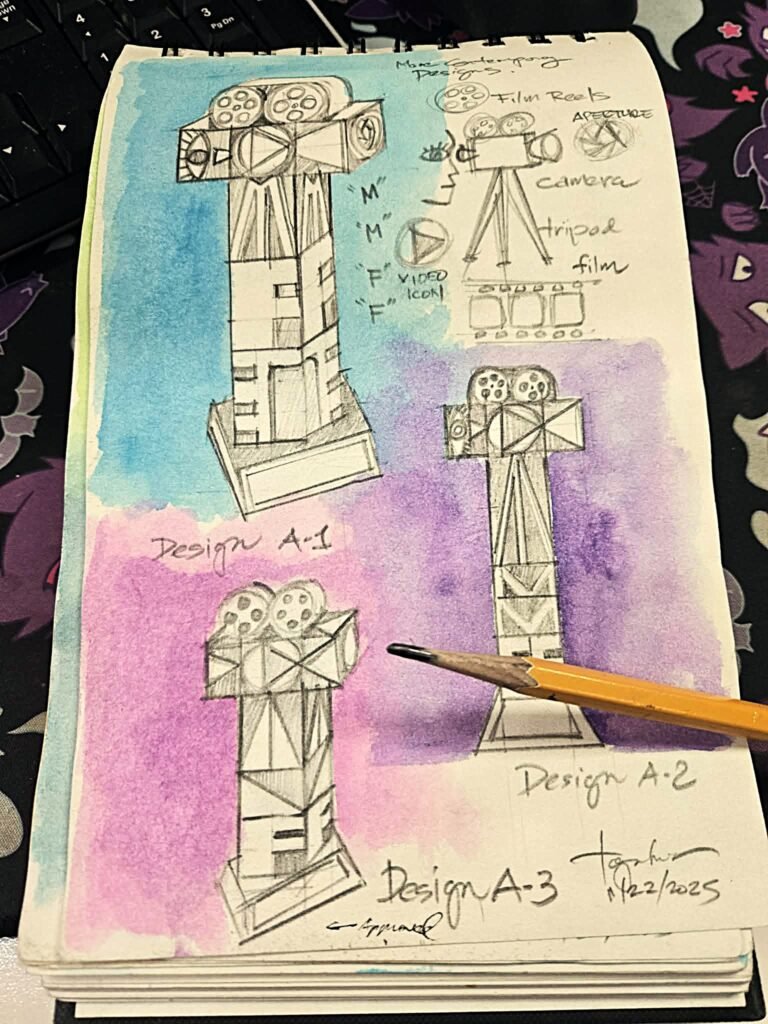
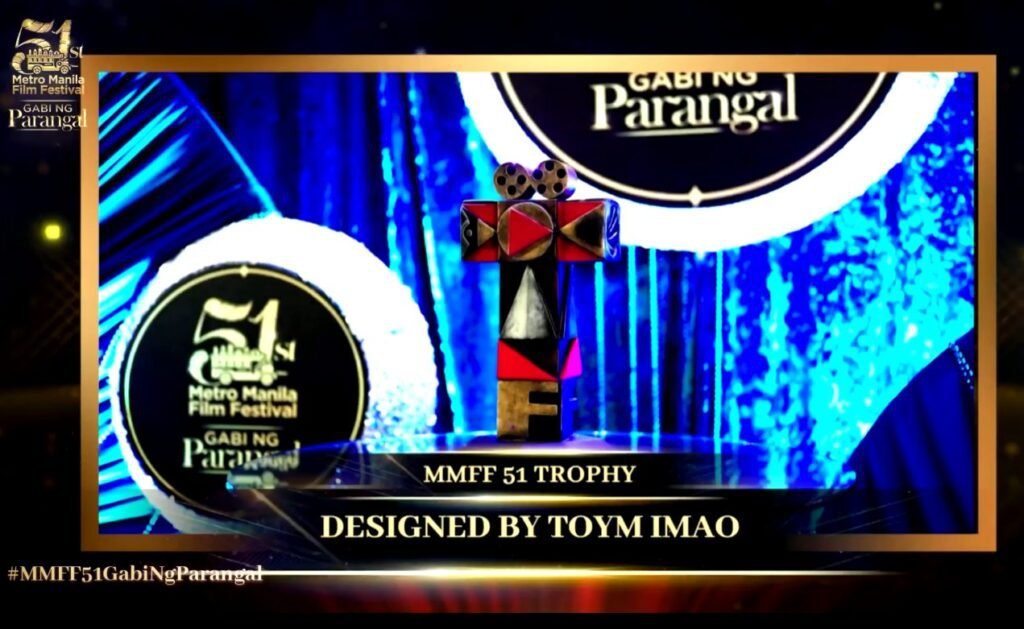
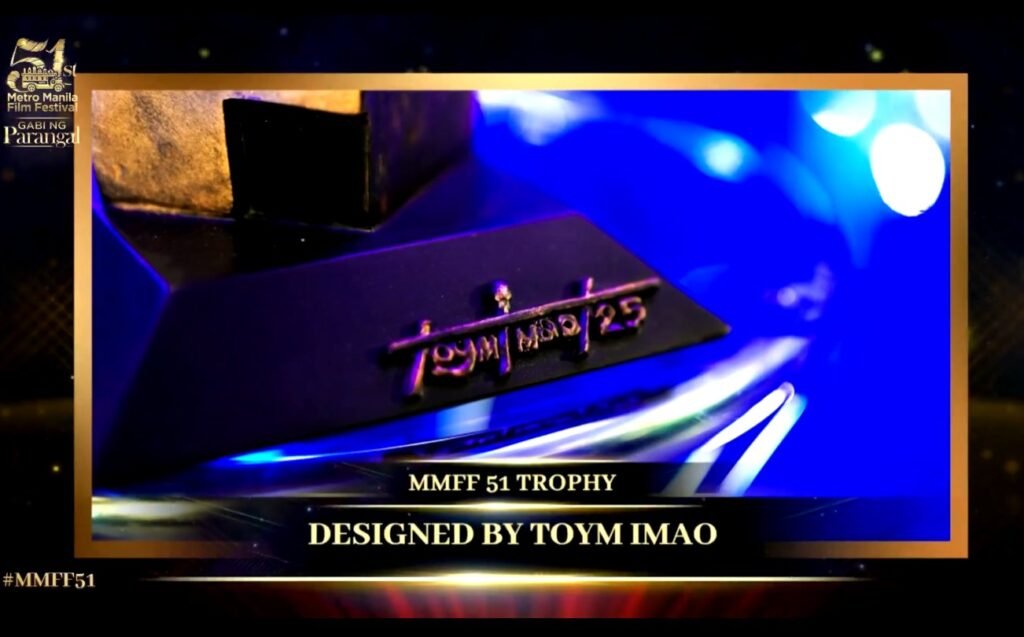
Brecht’s assertion that “art is not a mirror held up to reality, but a hammer with which to shape it” anchors the trophy’s philosophical foundation. It asserts that cinema must do more than depict reality—it must challenge, provoke, and participate in shaping social consciousness. This idea is further enriched by the phrase “the camera is a loaded gun,” attributed to American filmmaker Gordon Parks and often cited by Diaz-Abaya in her teaching. For her, cinema carried immense power and ethical responsibility, a lesson Imao absorbed firsthand while studying film and apprenticing under Diaz-Abaya from 2009 to 2010.
These ideas take physical form in the trophy’s sculptural design, which simultaneously evokes a hammer and the grip of a gun. The dual imagery underscores film as both a creative craft and a force capable of impact. Details such as visible film reels reference the analog era of cinema, while a subtle “play” arrow nods to contemporary digital platforms, bridging tradition and modernity in Philippine filmmaking.
The title “Tatangnan” deepens the work’s meaning. In Filipino, tatangnan refers to holding or taking hold of something, often a handle, but it also carries the sense of looking closely or examining. Rooted in tangnan (to hold) and tingnan (to look), the word unites action and contemplation. In this way, the trophy becomes an invitation—to grasp cinema not only as something to admire, but as a tool to be wielded thoughtfully, critically, and responsibly.
Imao’s approach reflects a career shaped by art, history, and advocacy. A teacher, human rights advocate, and multidisciplinary artist, he works across sculpture, painting, storytelling, and set design. He was mentored by National Artists Napoleon Abueva and his father, Abdulmari Asia Imao, trained in filmmaking under Diaz-Abaya, and grounded in Philippine history and culture through his work with Alejandro Roces at The Manila Times. He studied Architecture and Fine Arts at the University of the Philippines and earned his MFA in Sculpture with honors from the Maryland Institute College of Art as a Fulbright Scholar.
His large-scale public artworks and politically engaged installations have been exhibited at major institutions such as the Cultural Center of the Philippines, Metropolitan Museum of Manila, Ayala Museum, and Lopez Museum, as well as in New York and Washington, D.C. In film and theater, he is a Cinemalaya Best Production Design awardee for K’na the Dreamweaver and a two-time Gawad Buhay recipient for set design, with notable collaborations with Ballet Philippines and Tanghalang Pilipino.
Now serving as Dean of the UP College of Fine Arts and Chair of the UP President’s Committee on Culture and the Arts, Imao continues to shape the cultural landscape both as an artist and an institution builder. His design for the MMFF 2025 trophy stands as a fitting symbol of that role—honoring cinema not just for what it shows, but for what it dares audiences to see, question, and act upon.
Photos: Toym Leon Imao Facebook