



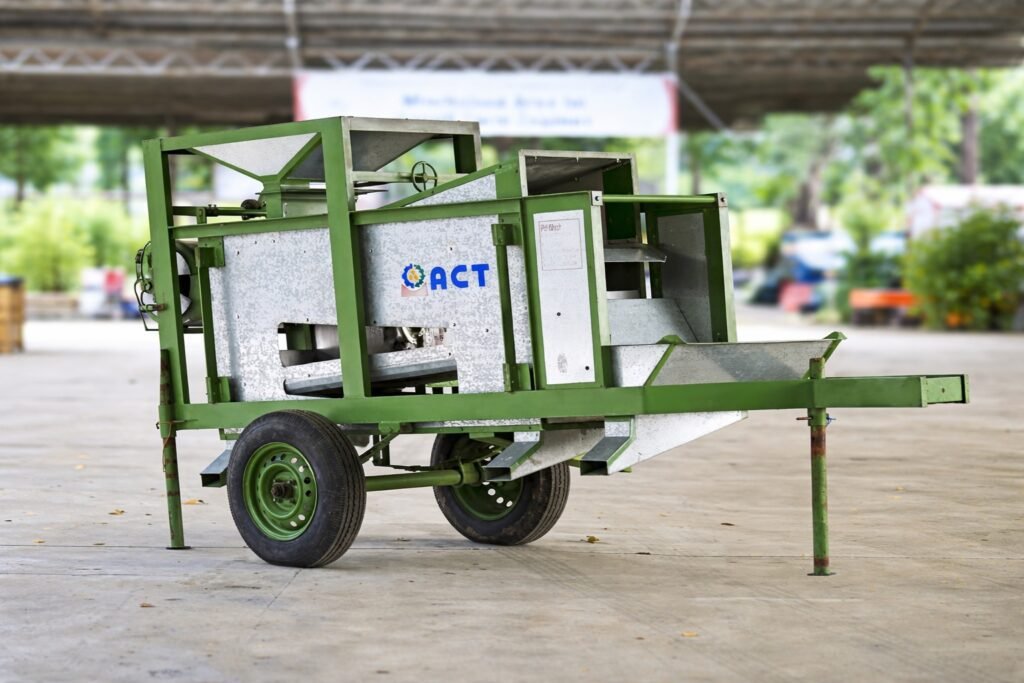
Philippine Center for Postharvest Development and Mechanization (PHilMech) is promoting the use of a soybean sorter designed to help farmers produce cleaner grains, improve product quality, and increase the market value of their harvest.
Speaking at the agency’s facility in Science City of Muñoz, Nueva Ecija, PHilMech Agricultural Mechanization Division researcher Donald Mateo said the country currently produces only about five percent of its soybean requirement, partly due to the limited availability of postharvest technologies in the past.
Mateo explained that the lack of technical support for postharvest handling has discouraged many farmers from continuing soybean production. During field visits, some farmers also noted that younger workers are hesitant to handle soybeans because the crop can cause skin irritation, contributing to the decline of soybean farming in the country.
To address these challenges, PHilMech researchers developed a soybean sorter that helps farmers clean and properly sort their harvest before selling it in the market.
According to Mateo, farmers often face price deductions when their soybeans contain dirt, weed seeds, and damaged grains. Proper cleaning and sorting, he said, can help farmers secure better prices for their produce.
“The main benefit is immediately felt by farmers because when the product is clean, buyers no longer deduct from its price, allowing farmers to earn better and become more confident in selling their produce,” he said.
The soybean sorter works by cleaning, sorting, and grading grains according to size. It uses perforated screens and a blower system to remove impurities such as dirt and unwanted materials.
The machine can be operated by two people and can process about 700 to 850 kilograms of soybeans per hour—significantly faster than traditional manual methods such as using slanted plywood boards locally known as “paligid.”
Mateo added that unlike mung beans, which mature in stages and require multiple harvests, soybean pods usually mature at the same time once the plant turns yellow and the leaves fall, allowing farmers to harvest the entire crop in one go.
The sorter separates soybeans into different size grades while removing impurities and weed seeds. However, it cannot detect fermented or discolored grains, and uniform grain size remains important for processors to ensure consistent roasting quality.
PHilMech continues to promote agricultural mechanization through initiatives such as its Youth for Mechanization advocacy, which encourages young people to participate in modern farming technologies while helping reduce the workload of Filipino farmers across Central Luzon.