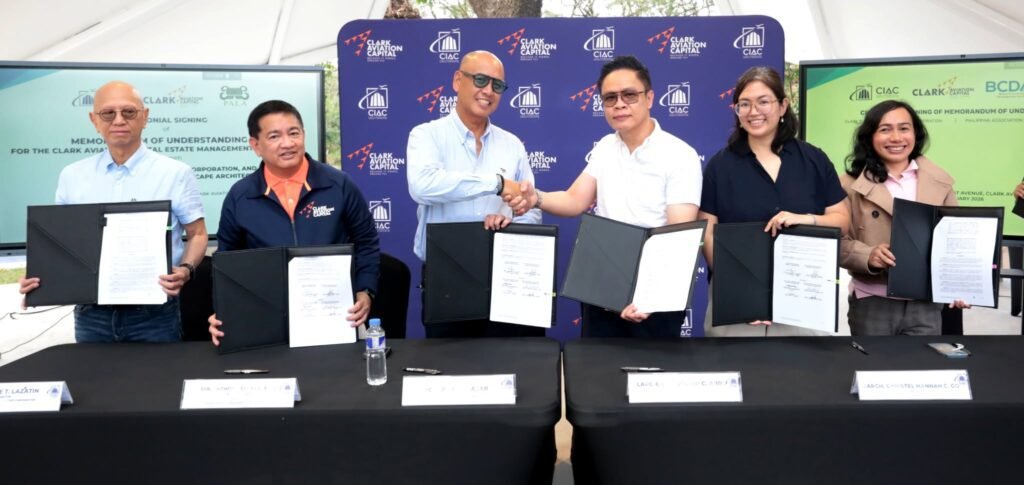
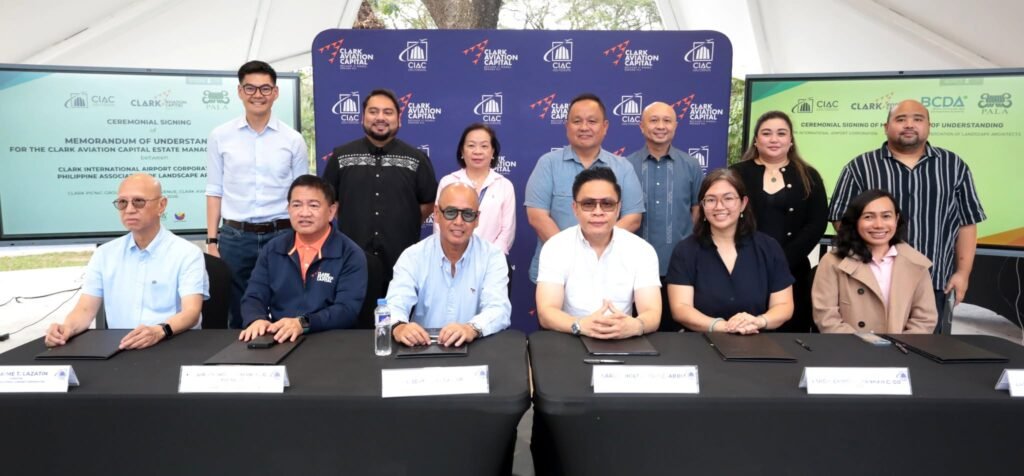
Clark International Airport Corporation (CIAC) strengthened its push for sustainable and inclusive development after signing two memoranda of understanding on February 24 at the Clark Aviation Capital Picnic Grounds.
CIAC formalized partnerships with the Philippine Association of Landscape Architects (PALA) and South Korea-based Future iNet Co., Ltd. (FIN), marking a strategic move to advance heritage preservation, environmental sustainability, food security, and economic competitiveness in Clark and beyond.
Through its agreement with PALA, CIAC will implement its Urban Renewal and Heritage Conservation Program to ensure that Clark’s rapid transformation into a global aviation and logistics hub remains anchored in cultural identity. The initiative will establish a unified and sustainable landscaping framework designed to enhance public spaces, improve air quality, manage stormwater, and mitigate urban heat.
CIAC said the program will create greener, more livable environments for workers, residents, and visitors while preserving Clark’s historical and cultural elements. By integrating heritage conservation into urban planning, the corporation aims to strengthen local pride and safeguard the area’s identity amid modernization.
Meanwhile, the partnership with FIN will focus on conducting technological studies for the Cold Chain Bonded Logistics Depot system under the Clark National Food Hub. The project seeks to modernize the country’s food logistics network through improved temperature control systems, customs supervision, cost efficiency, and strategic inventory management.
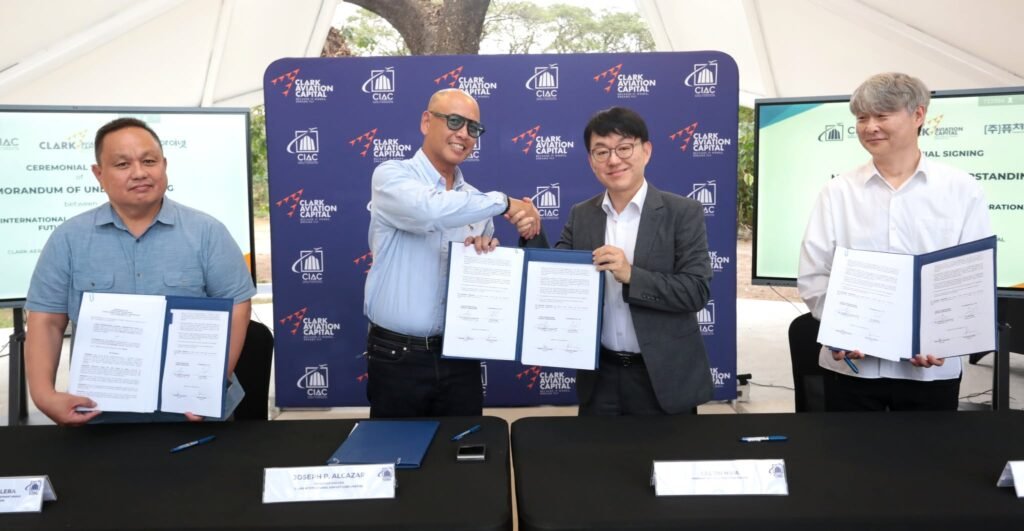
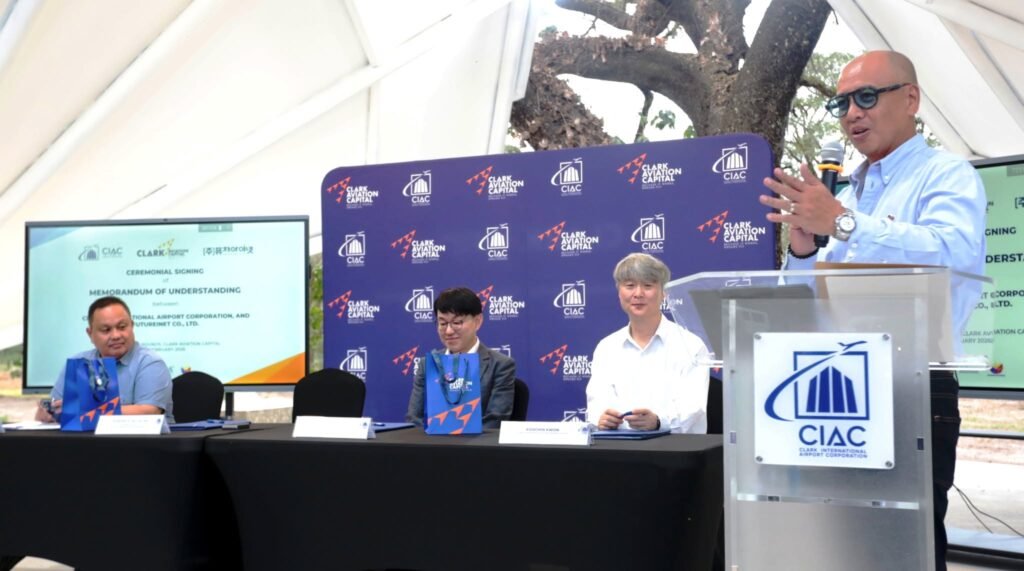
CIAC President and CEO Jojit Alcazar described the agreements as major steps toward realizing both the Urban Renewal and Heritage Conservation Program and the Clark National Food Hub Project.
The upgraded cold chain infrastructure is expected to reduce post-harvest losses for farmers, improve market access, and enhance supply chain reliability. Businesses stand to benefit from more efficient logistics, while consumers can expect safer and more stable food supplies. Ultimately, the project supports national food security and economic resilience.
Together, the two partnerships reinforce CIAC’s broader strategy to position Clark not only as a premier business hub but also as a catalyst for inclusive growth. By combining environmentally responsible infrastructure with advanced technology, CIAC aims to attract investments, generate jobs, and stimulate industries ranging from agriculture and logistics to tourism and urban services.
As CIAC transforms the Clark Civil Aviation Complex into the Clark Aviation Capital, its latest collaborations demonstrate how strategic partnerships can align modernization with social responsibility—uplifting communities, preserving heritage, and strengthening national systems for long-term progress.