
𝗞𝘂𝘄𝗲𝗻𝘁𝗼𝗻𝗴 𝗣𝗲𝘆𝘂𝗽𝘀 𝗯𝘆 𝗔𝘁𝘁𝘆. 𝗗𝗲𝗻𝗻𝗶𝘀 𝗚𝗼𝗿𝗲𝗰𝗵𝗼
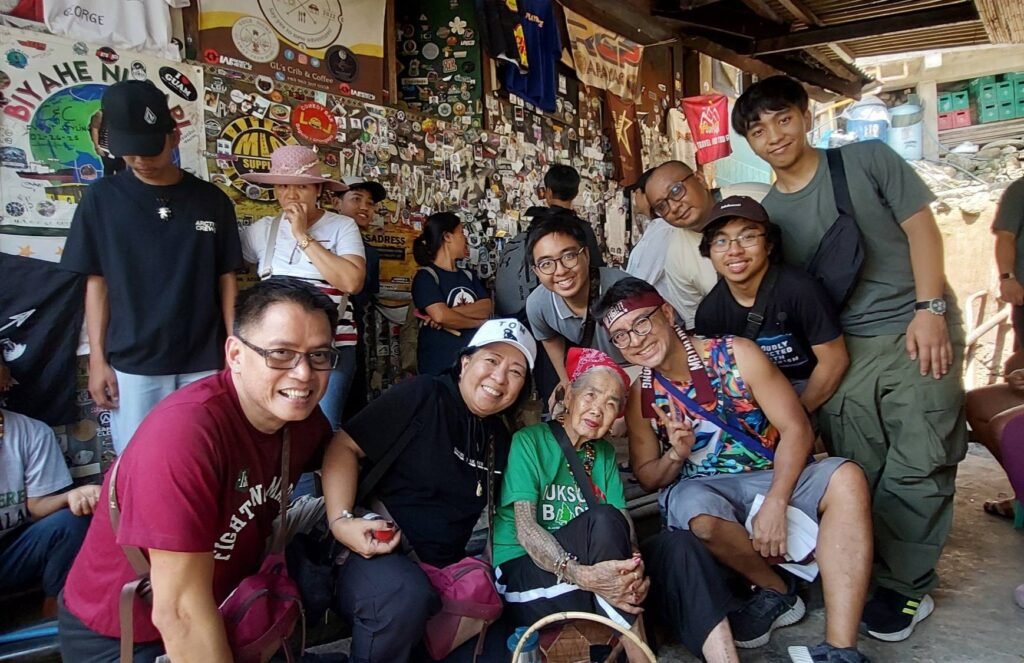
Buscalan Tinglayan, Kalinga – I was inked last Holy Week in my right forearm with the iconic three dots tattoo by Apo Whang-Od, the so-called last and oldest surviving mambabatok.
Batok refers to the traditional Filipino tattooing practice, particularly in the northern Luzon region that has been around for more than a thousand years. It involves hand-tapped designs applied to the skin using thorns or other sharp objects attached to a stick, often made from bamboo.
The elaborate designs once adorned both men and women that have deep cultural and spiritual significance, often representing tribal identity and kinship, as well as bravery, beauty, and social or wealth status.
The designs were commonly repeating geometric designs (lines, zigzags, chevrons, checkered patterns, repeating shapes); stylized representations of animals (like snakes, lizards, eagles, dogs, deer, frogs, or giant centipedes), plants (like grass, ferns, or flowers), or humans; lightning, mountains, water, stars, or the sun. Each motif had a name, and usually a story or significance behind it.
Whang-od Oggay also known as Maria Oggay is part of the Butbut tribe based in Buscalan. The other Butbut tribe vilages include Bugnay, Locong, Butbut proper, and Ngibut.
According to the Joshua Project, while many are now Christians, some older Kalinga generations still adhere to traditional practices like animal sacrifice to appease the spirits for sick children or adults and other misfortune. Tattoos for them reflected life and identity.
For over nine decades, Whang-Od had been hand-tapping tattoos as she has inked tribal warriors with elaborate geometric patterns and tribal women with symbols of fertility.
She began her apprenticeship at the age of 13, mastered the practice at 25, and is still tattooing with her age believed to be more than a century.
Whang-od’s signature tattoo is the three dots, similar to an ellipsis which symbolize her and her two apprentices, her niece Grace Palicas, and her grandniece Elyang Wigan. This represents the continuation of “batok,” from one generation to the next. The three dots are similar to an artist’ signature, signifying “made in Kalinga”.
She has become a living symbol of Kalinga culture, widely recognized for a revival of traditional hand-tapped tattoo culture in contemporary society.
The tattooing instrument is a needle fashioned from a pomelo and attached to the top of a handcrafted bamboo stick.
The tattoo ink is composed of indigenous materials, usually a mixture of charcoal and water.
I visited Buscalan last Holy week along with my classmates from the University of the Philippines College of Law, Annee Del Rosario and Cornelio Ventura.
The National Commission for Culture and the Arts (NCCA) conferred on Whang-od the prestigious Dangal ng Haraya Award in 2018.
Tattoos as protected copyright was the topic in the Emerging IP Rights Committee of the 76th Council Meeting of the Asian Patent Attorneys Association (APAA) at the Conrad Hotel in Pasay City, Metro Manila from November 18 to 21, 2024.
A tattoo is “an indelible mark or figure fixed upon the body by insertion of pigment under the skin or by the production of scars.”
Copyright protection applies to “original works of authorship,” both published and unpublished; this includes writing, art, music, dramatic works and other intellectual property.
Copyright arises automatically when a “work” that qualifies for protection is created and “fixed”— that is, taken out of the mind of the creator and turned into a tangible, material form.
The discussion revolved around issues of possible statutory or common law defenses or exemptions, application of tests of substantial similarity in various jurisdictions, and proper assessment of damages.
Many noted the lack of legal precedents specifically addressing tattoos within copyright laws.
The application of the fair use concept, in order to avoid liability for copyright infringement, depends on varying circumstances that are subjectively determined based on the reproduction of the copyrighted work on a person’s body as a tattoo.
Some participants argued that a person’s body is a form of inviolable self-expression and art, which should exempt it from copyright infringement.
The absence of a protection mechanism to enjoin copyright-infringing artwork in the form of tattoos presents a challenge, largely due to the lack of legislation specifically addressing tattoos as copyrighted works.
Unless a tattoo is considered an original expression or independent creation of the tattoo artist, or if the tattoo qualifies under the circumstances covered by the doctrine of fair use, it is no different from other forms of intellectual creation, which may warrant different treatment.
(𝑃𝑒𝑦𝑢𝑝𝑠 𝑖𝑠 𝑡ℎ𝑒 𝑚𝑜𝑛𝑖𝑘𝑒𝑟 𝑜𝑓 𝑈𝑛𝑖𝑣𝑒𝑟𝑠𝑖𝑡𝑦 𝑜𝑓 𝑡ℎ𝑒 𝑃ℎ𝑖𝑙𝑖𝑝𝑝𝑖𝑛𝑒𝑠 𝐴𝑡𝑡𝑦. 𝐷𝑒𝑛𝑛𝑖𝑠 𝑅. 𝐺𝑜𝑟𝑒𝑐ℎ𝑜 ℎ𝑒𝑎𝑑𝑠 𝑡ℎ𝑒 𝑠𝑒𝑎𝑓𝑎𝑟𝑒𝑟𝑠’ 𝑑𝑖𝑣𝑖𝑠𝑖𝑜𝑛 𝑜𝑓 𝑡ℎ𝑒 𝑆𝑎𝑝𝑎𝑙𝑜 𝑉𝑒𝑙𝑒𝑧 𝐵𝑢𝑛𝑑𝑎𝑛𝑔 𝐵𝑢𝑙𝑖𝑙𝑎𝑛 𝑙𝑎𝑤 𝑜𝑓𝑓𝑖𝑐𝑒𝑠. 𝐹𝑜𝑟 𝑐𝑜𝑚𝑚𝑒𝑛𝑡𝑠, 𝑒-𝑚𝑎𝑖𝑙 𝑖𝑛𝑓𝑜@𝑠𝑎𝑝𝑎𝑙𝑜𝑣𝑒𝑙𝑒𝑧.𝑐𝑜𝑚, 𝑜𝑟 𝑐𝑎𝑙𝑙 0917-502580)