


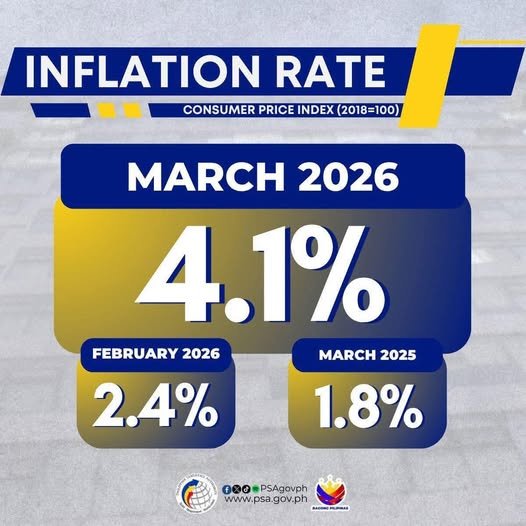
Headline inflation accelerated to 4.1 percent in March, up from 2.4 percent in February, exceeding the forecast range of 3.1 percent to 3.9 percent set by the Bangko Sentral ng Pilipinas.
Despite the uptick, average inflation for the first quarter of 2026 stood at 2.8 percent—still below the central bank’s 3.0 percent full-year target, but within its tolerance band of ±1.0 percentage point.
Inflation also climbed among the country’s lowest-income households, rising from 2.5 percent in February to 4.2 percent in March.
The increase in headline inflation was driven largely by higher domestic petroleum prices, as the ongoing Middle East conflict disrupted global oil supply chains. Electricity rates also went up due to increased transmission and generation charges.
Food inflation contributed to the rise, particularly due to higher rice prices. Farmgate prices increased during the lean season, while postharvest, transport, and logistics costs were pushed up by rising fuel prices.
On a month-on-month, seasonally adjusted basis, inflation jumped from 0.4 percent in February to 1.6 percent in March.
Core inflation, which excludes volatile food and energy items, also edged up from 2.9 percent to 3.2 percent.
The central bank noted that rising risks to the inflation outlook require continued vigilance, adding that it will assess incoming data at its next policy meeting to determine appropriate actions in line with its mandate to maintain price stability.