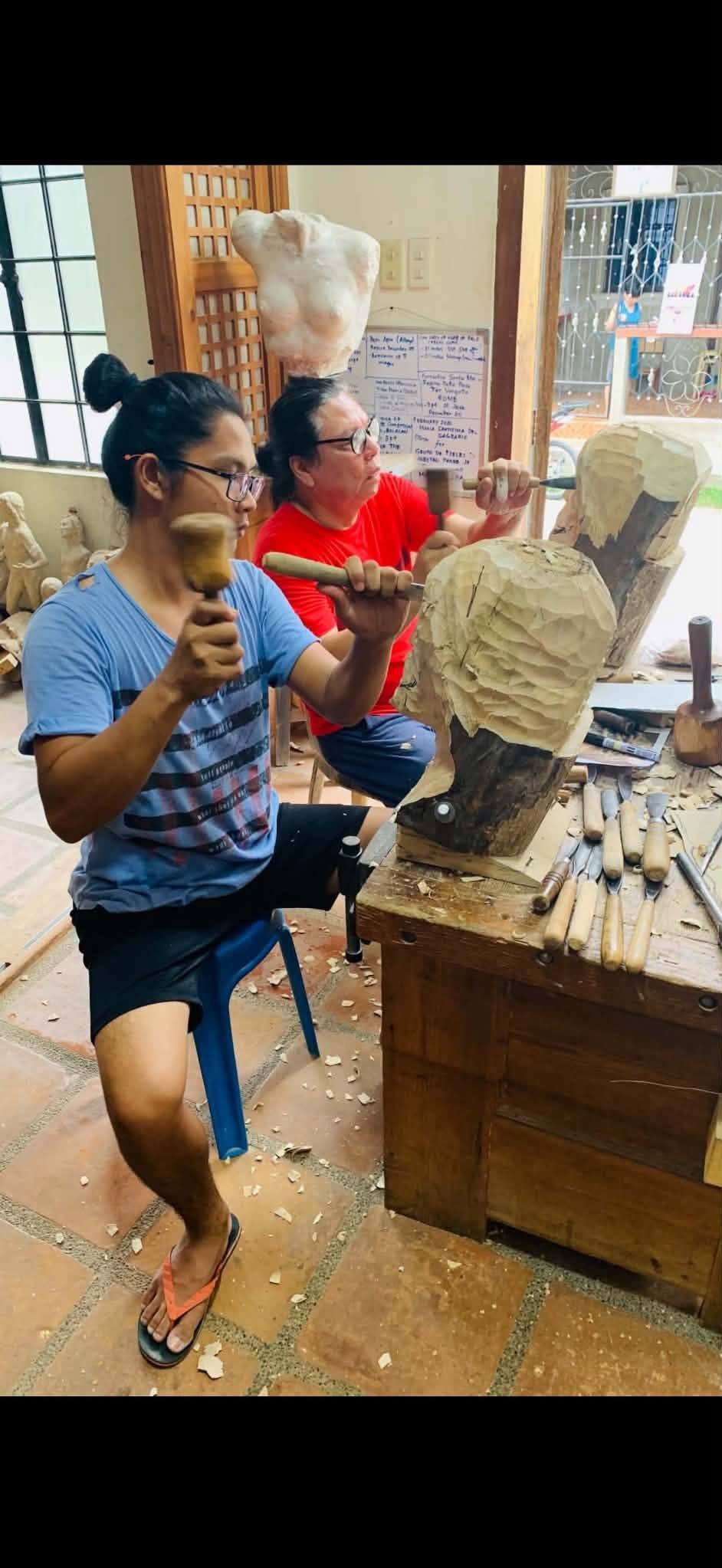
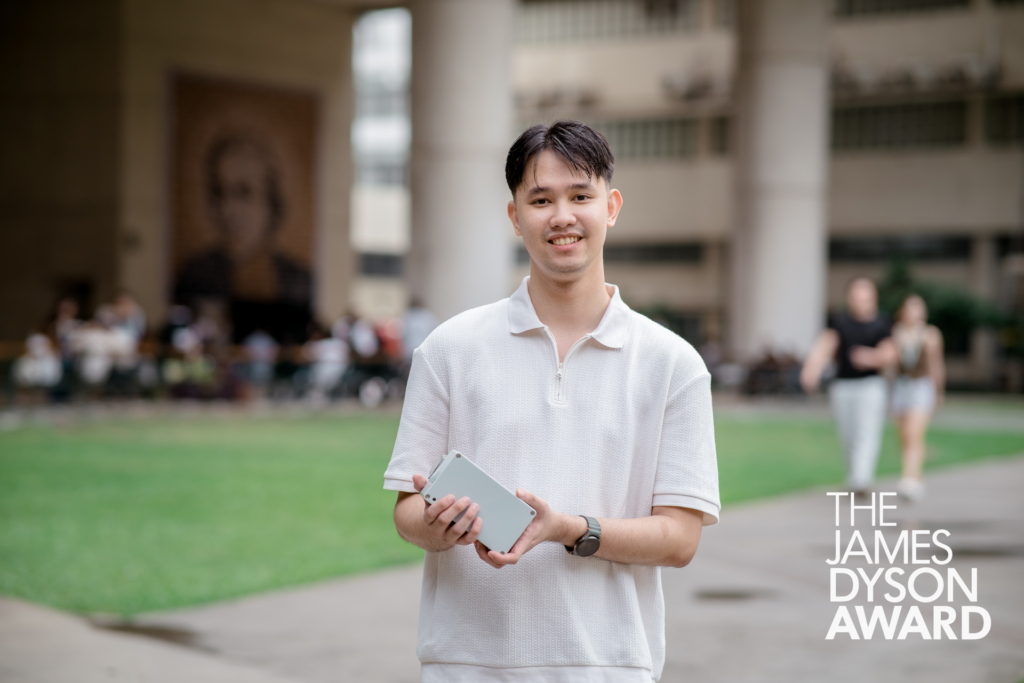
Named after Saint Joseph following a difficult birth, introduced to the world of sculpture as a child, and raised in the shadow of one of Pampanga’s most celebrated ecclesiastical artists, Totek Layug is now carving his own place in the art world. His debut last week as a full-fledged artist marks the beginning of a new chapter in a journey shaped by faith, family, perseverance and an enduring love for art.
For Totek Layug, the story of his life began with faith even before he could hold a piece of clay.
Named Joseph at birth and affectionately called Totek, he came into the world under difficult circumstances. He was born wrapped in his own umbilical cord, an ordeal that put his survival at risk and left his family fearing for his life.
In those anxious moments, his father, renowned Kapampangan artist Willy Tadeo Layug, turned to Saint Joseph in prayer, pleading for the young child’s survival. The family’s devotion to the saint became an important part of Totek’s story, making his given name more than just a choice of his parents. It became a reminder of faith, hope and a father’s prayer for his son.
Little did they know that the child whose life they had entrusted to prayer would one day grow up to create works that would inspire faith, preserve history and bring pride to his community.
Art came naturally to Totek. Growing up in a household where creativity was part of everyday life, he was exposed early to the world of sculpture and craftsmanship. As a child, he was already working with clay, discovering the satisfaction of molding and shaping material with his own hands.
His fascination with the medium developed alongside his admiration for his father, a Presidential Merit Awardee for Ecclesiastical Art whose religious sculptures have earned recognition for their artistry and craftsmanship.
Like his father, Totek dreamed of studying at the University of Santo Tomas (UST), where he hoped to deepen his artistic abilities and follow a path that had also shaped Willy’s life. Their connection to the university would eventually become more than a shared aspiration. Both father and son pursued Painting at the UST Faculty of Fine Arts, and, in a remarkable convergence of their journeys, graduated alongside one another.
Willy was given the opportunity by UST to return and complete his degree, albeit belatedly, making their shared graduation a milestone that brought two generations of Layug artists together. For Totek, the moment was not simply about earning a degree; it was also about sharing an achievement with the father whose example first drew him toward art.
But while his father’s accomplishments provided inspiration, Totek was also determined to find his own artistic identity.
Last week, that aspiration took a significant step forward as he made his debut as a full-fledged artist, marking his emergence into the professional art world and the beginning of a new chapter beyond being known simply as the son of Willy Layug.
It is a milestone built on years of exposure, learning and experimentation, and one that comes with an impressive portfolio of public sculptures already bearing his name.
Carving history into stone
One of Totek’s latest achievements is the creation of the new monument honoring Luis Taruc, one of the country’s most prominent resistance leaders during World War II.
Commissioned by San Luis businessman Abel Manliclic, the monument was recently unveiled in a ceremony attended by local officials and distinguished guests, including Senator Risa Hontiveros and Fourth District Representative Anna York Bondoc.
The monument portrays Taruc alongside guerrillas Praxedes Clarin and Antonio Sumang, representing those who joined the Hukbo ng Bayan Laban sa Hapon (Hukbalahap), the resistance movement that fought against Japanese occupation.
Through the three figures, Totek gives physical form to an important chapter of Philippine history, recognizing not only a prominent resistance leader but also the courage and sacrifices of ordinary Filipinos who took part in the struggle.
The project is particularly significant for the young sculptor as it marks his third large monument commission.
For an artist only beginning to establish his professional identity, being entrusted with works of such historical and public significance is a testament to the growing confidence in his artistic capabilities.
Giving faith a place in the community
Before the Luis Taruc monument, Totek had already made a lasting contribution to his hometown through his monumental image of the Risen Christ in Barangay Santa Ursula, West Lateral Dike, Betis District, Guagua.
The 16-foot sculpture stands atop a view deck facing Paglabuan Bridge, bringing its total height to 24 feet.
The image serves as the final leg of the devotional Stations of the Cross along the dike, complementing the works painted by fellow Betis artists.
Totek began the project on August 9, 2019, with a vision of sharing his artistry with the community and demonstrating what local talent could contribute to the wider art world.
“There is an existing sculpture of the Risen Christ in that area, but we wanted to show the community that we can come up with a more fitting rendition of Our Lord,” Totek said in an earlier account of the project.
The sculpture was a collaboration between father and son, with Totek and Willy donating the work to the people of Guagua.
It was later blessed by St. James the Apostle Parish priest Reverend Father Raul de Los Santos and unveiled by then-Mayor Dante Torres as part of the activities commemorating the parish’s 450th foundation anniversary.
Today, the towering image has become a familiar landmark, welcoming motorists and commuters coming from Minalin and attracting bikers and joggers who frequent the dike and its nearby eco-park.
Beyond its artistic value, the project reflects Totek’s desire to make art accessible to ordinary people, allowing it to become part of the community’s everyday life and spiritual experience.
More than his father’s son
Being the son of Willy Layug comes with both inspiration and expectations.
His father has established a distinguished name in ecclesiastical art, particularly in the intricate craftsmanship and religious imagery that have become hallmarks of Betis artistry.
For Totek, growing up in this environment meant having a front-row seat to the discipline, patience and dedication required to create meaningful works of art.
His early experience with clay provided the foundation, while his father’s example helped nurture his appreciation for sculpture as both an artistic expression and a vocation.
But Totek’s growing body of work suggests that he is not limiting himself to the artistic tradition that made his family known.
His Risen Christ sculpture demonstrates his understanding of religious art and devotion, while the Luis Taruc monument highlights his ability to interpret history and give lasting form to stories of courage and sacrifice.
His educational exposure in Barcelona has also added another dimension to his artistic development, allowing him to experience influences beyond the rich sculptural traditions of his hometown.
In many ways, he represents a new generation of Kapampangan artists who carry the heritage of their communities while exploring their own creative directions.
A legacy of his own
Totek’s debut as a full-fledged artist last week is more than a personal achievement. It is a coming-of-age moment for someone who has spent much of his life surrounded by art, learning from a father whose name is already deeply established in the field.
His journey, however, has never been solely about following in his father’s footsteps.
It began with a father’s prayer to Saint Joseph for the survival of his newborn son. It continued with a young boy discovering the possibilities of clay, dreaming of studying at UST and learning the craft in an environment where art was a way of life.
Now, with major public monuments and religious sculptures to his credit, Totek is gradually establishing a name of his own.
The Layug artistic legacy remains an important part of his identity, but it is no longer the only story worth telling.
From the clay he first molded as a child to the towering figures he now creates for communities to remember and admire, Totek is proving that artistic legacies are not simply inherited. They are shaped through years of dedication, courage and the willingness to create something distinctly one’s own.
And perhaps there is something fitting about the journey of a boy named Joseph, whose life began with a prayer for survival and has led him toward creating works that leave a lasting impression. That journey finds its first defining expression in the Nuestra Señora de Alegría, Totek’s debut piece as a full-fledged artist—a work that signals the beginning of a path he will shape in his own right.
He may have inherited his father’s artistic world, but Totek Layug is now beginning to sculpt a legacy of his own.
Story and photos: Lex Sampang