

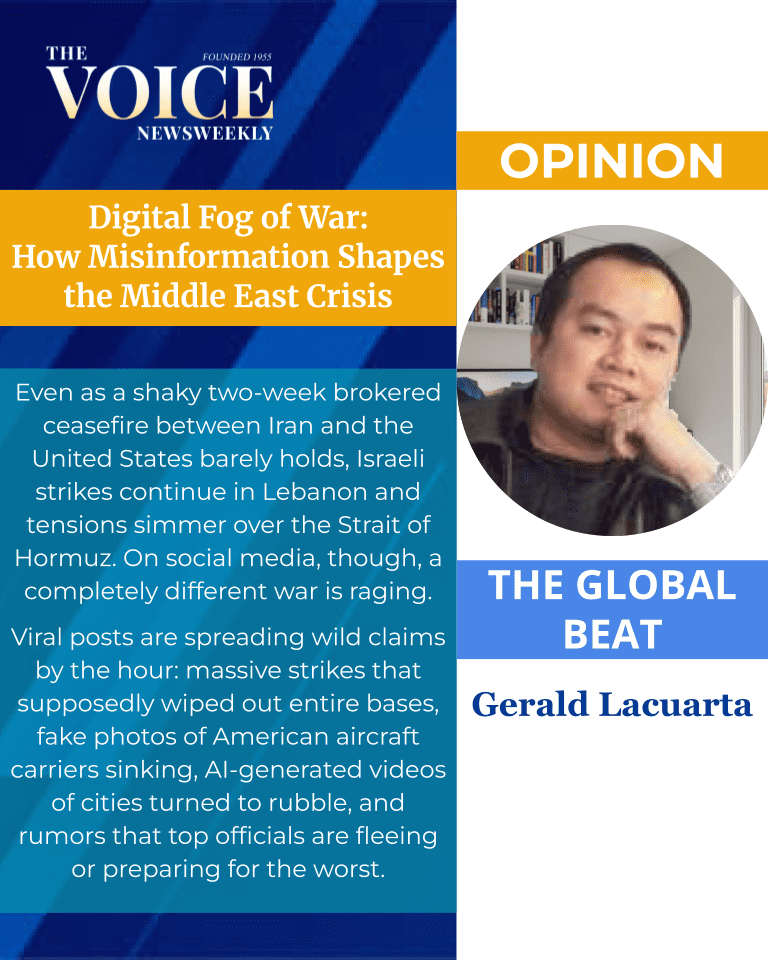
𝗧𝗵𝗲 𝗚𝗹𝗼𝗯𝗮𝗹 𝗕𝗲𝗮𝘁 𝗯𝘆 𝗚𝗲𝗿𝗮𝗹𝗱 𝗟𝗮𝗰𝘂𝗮𝗿𝘁𝗮
Even as a shaky two-week brokered ceasefire between Iran and the United States barely holds, Israeli strikes continue in Lebanon and tensions simmer over the Strait of Hormuz. On social media, though, a completely different war is raging.
Viral posts are spreading wild claims by the hour: massive strikes that supposedly wiped out entire bases, fake photos of American aircraft carriers sinking, AI-generated videos of cities turned to rubble, and rumors that top officials are fleeing or preparing for the worst.
Just recently, one story claimed Israel’s leadership had abandoned the country, hinting at imminent nuclear escalation. As this is being written in the midst of a two week US-Iran ceasefire, there is zero credible evidence to back that up. While people are indeed moving away from active conflict zones, these over-the-top narratives usually mix scraps of truth with heavy speculation. And they travel much faster than the facts can catch up.
This is not an isolated case. Since the US-Israel-Iran conflict flared up again in late February 2026, there has been an unprecedented wave of misinformation. Researchers have tracked dozens of false claims gaining hundreds of millions of views.
Pro-Iran accounts have been flooding feeds with AI-generated clips showing the USS Abraham Lincoln going down or Tel Aviv in ruins, many of them recycling old footage or even video game scenes. On the other side, old protest videos are being reused to exaggerate unrest in Iran or inflate military victories. Deepfakes have put world leaders in ridiculous situations, shown captured soldiers who were never captured, and depicted tragedies that did not happen where or when claimed. Even real events, like strikes that did cause civilian deaths, have been twisted with synthetic additions for maximum emotional impact.
Fact-checkers have spotted the usual patterns: heavy emotional language, anonymous “sources,” lightning-fast spread on X and Facebook, and those slippery disclaimers like “rumors suggest” that let posters avoid any real responsibility. The end result is a thick digital fog that twists how people see the conflict, stokes fear and anxiety, and makes actual diplomacy even harder.
In war, truth is often the first casualty. In 2026, artificial intelligence has made the weapons of deception faster, cheaper, and far more convincing.
For Filipinos, this distant conflict hits closer to home than many realize. Hundreds of thousands of Overseas Filipino Workers (OFWs) remain in the Middle East, vulnerable to regional instability.he Department of Migrant Workers and Malacañang have repeatedly warned people to be careful about panic-inducing misinformation that could even get them in trouble with host-country laws.
Locally, false stories have already popped up claiming that Philippine EDCA sites could become Iranian targets. The Department of National Defense quickly pushed back, stressing there is no credible direct threat to the Philippines and calling out content that deliberately stirs fear.
This hits home because the Philippines knows disinformation all too well. We were once called “patient zero” for fake news during the 2016 elections, and we’ve been fighting troll farms, coordinated fake accounts, and AI-generated attacks ever since. Revisionist history, deepfake videos against politicians, and foreign influence ops have all chipped away at public trust and widened our divisions.
When alarming, unverified clips about the Middle East start flooding Filipino timelines, many people share them out of genuine concern. But all too often, truth becomes the victim. The mechanics are the same everywhere: people are quick to post without verification, and emotions rule over evidence.
The consequences are real. Misinformation can push OFWs into risky choices based on rumors. It can shake confidence in government efforts to protect them. And in a country already dealing with South China Sea tensions and deep political rifts, this imported chaos can make our own problems worse.
So what can we actually do?
As ordinary readers and citizens, start by pausing before you share. Ask simple questions: Is this from a verified source? Have several reputable outlets — local or international — confirmed it? Is the post clearly trying to trigger fear or rage instead of giving real information?
Support solid fact-checkers and real journalism. Push platforms to do better, but also sharpen your own digital literacy. Tools for spotting AI fakes, recycled videos, and missing context are getting easier to use.
The government has a part to play too. The Philippine authorities’ quick advisories on Middle East disinformation have been helpful. Long-term, we need stronger media literacy programs in schools and communities so Filipinos can better navigate this AI-saturated information environment.
The tensions between the US, Israel, and Iran show that today’s conflicts are not just fought with missiles and drones. They are fought with narratives. Here in the Philippines, where social media already shapes elections, public opinion, and even how we see foreign policy, learning to resist unverified drama is not optional. It is necessary for staying an informed citizen.
The Middle East conflict is a stress test for habits Filipinos already have. The people sharing AI-generated footage of sinking carriers today are, in many cases, the same people who shared fabricated Marcos-era history in 2022. The subject matter is different. The reflex is identical. Patient zero status was supposed to mean something — a hard lesson learned early. What it should have taught us is that no app update or platform policy can fix those habits for us. People should care enough about truths and facts before they hit the share button.