Bonifacio Global City (BGC) is entering a more inclusive and transit-driven phase of development as major infrastructure projects under the administration of Ferdinand R. Marcos Jr. converge with long-term urban planning reforms.
Central to this transformation is the Metro Manila Subway, one of the government’s flagship transport initiatives being implemented by the Department of Transportation (DOTr). The subway is envisioned as the backbone of a more integrated mass transit system that will connect key business districts and residential hubs across Metro Manila.
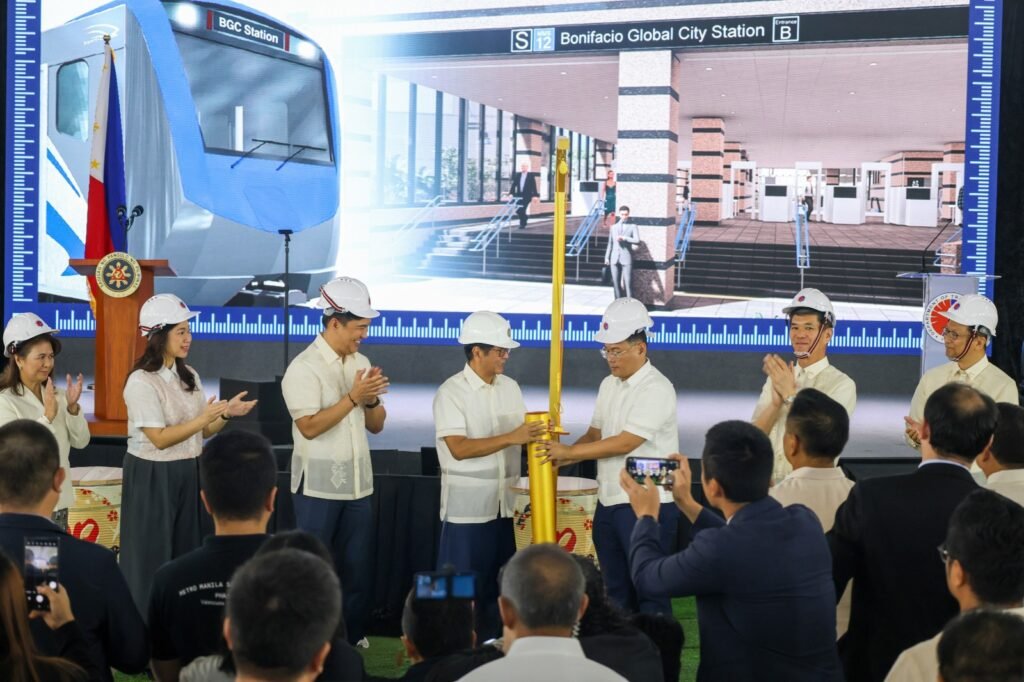
On February 13, President Marcos led the groundbreaking ceremony for the 1.33-kilometer segment linking Shaw Boulevard Station in Pasig City to Lawton Avenue Station in Taguig City, including stations within Uptown Bonifacio Global City. With planned stops near Kalayaan Avenue and the eastern section of BGC, the district is expected to gain direct underground rail access to Ninoy Aquino International Airport and major hubs in Quezon City in under 30 minutes.
The subway system will also interconnect with existing and upcoming railway lines, including LRT-1, MRT-3, MRT-7, LRT-2, MRT-4, and the North-South Commuter Railway, strengthening Metro Manila’s connectivity with neighboring provinces.
For the Bases Conversion and Development Authority (BCDA), which oversees BGC, the subway project marks a crucial step in reducing the district’s reliance on private vehicles while laying the groundwork for stronger transit-oriented development.
BCDA President and CEO Engr. Joshua M. Bingcang said national infrastructure investments are enabling BGC to evolve into a more commuter-focused and accessible district, enhancing mobility, property values, and long-term competitiveness.
Improved rail access is expected to increase pedestrian activity around future stations, benefiting nearby residential condominiums, office spaces, and retail corridors.
People-Centric Redevelopment
Alongside rail expansion, strategic redevelopment projects are reshaping key areas within BGC. The former Fort Strip property along 5th Avenue is being repositioned for higher-density, mixed-use development aligned with the district’s next-stage urban model. This redevelopment facilitated the opening of a new 7th Avenue road segment toward 32nd Street, improving traffic flow and restoring continuity to the area’s street grid.
These initiatives form part of a broader recalibration of BGC’s master plan. BCDA, in partnership with SyCip Gorres Velayo & Co., is updating the BGC Master Development Plan to align land use with upcoming transport infrastructure, enhance walkability, expand green spaces, and integrate smart systems for traffic and utilities management.