
𝗞𝘂𝘄𝗲𝗻𝘁𝗼𝗻𝗴 𝗣𝗲𝘆𝘂𝗽𝘀 𝗔𝘁𝗯𝗽. 𝗯𝘆 𝗔𝘁𝘁𝘆. 𝗗𝗲𝗻𝗻𝗶𝘀 𝗚𝗼𝗿𝗲𝗰𝗵𝗼
A whip symbolizes sufferings – Christ in the hands of the Roman soldiers and the cruelties to Filipinos under Spanish colonial rule.
Filipino Catholics are known for having sincere, enormous and extreme expressions of piety considering that the country is the third-largest Catholic population in the world.
The fervent devotion and faith shown by devotees became a prime manifestation of the fusion of Catholic and secular beliefs and practices of Filipinos.
Lent is the commemoration of the suffering, crucifixion and resurrection of Jesus Christ. It is a 40-day-long observance that begins on Ash Wednesday, and ends with Easter Sunday.
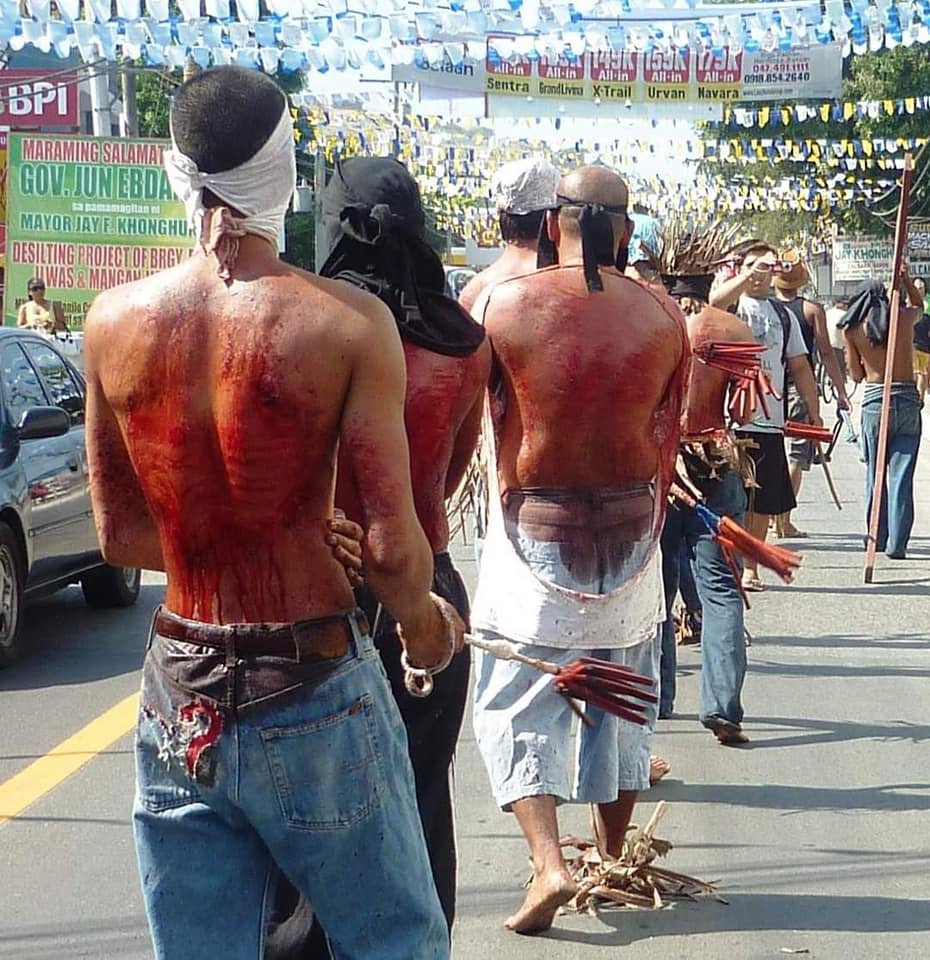

As Catholics see this season as a time for personal conversion and atonement, many Filipinos perform traditions in the week leading to Easter in the hope they will be cleansed of sins and illnesses and their wishes might be granted.
Some penitents have enacted a much greater mortification on Good Friday – flagellation and crucifixion.
During my younger days, I used to wait for the procession of the “penitensya” coming from the Malibay area in Pasay City.
Flagellation (from Latin flagellare, to whip) rituals were built around processions, hymns, distinct gestures, uniforms, and discipline.
Flagellants – hooded, half-naked men – scourge themselves by first cutting their backs, chest, arms and legs with a blade or knife then whip their backs with bamboo-tipped burillos or with whips embedded with thorns and glass shards as the blood flows out of their wounds.
Some participants carry crosses through local churches, then lie on scorching concrete pavements, with arms spread as they are hit on the back with wooden paddles as an act of full surrender to the mercy of God.
For many flagellants, it is not enough that they confess their sins. Serious injuries must be inflicted upon themselves so that they will be convinced that their sins have been forgiven. They believe that by punishing the body, the sins would be absolved and the soul would be more potent.
Some do it as an act of sacrifice for the welfare of their families or to re-live the pain and sacrifice of Christ in the hands of the Roman soldiers
It was even featured in “The Da Vinci Code” wherein Silas, an Opus Dei albino monk, whips himself with a “discipline”, or knotted cord, while wearing the cilice – a spiked chain worn on the upper thigh as a reminder of Christ’s suffering.
A disturbing practice is using a razor blade or a small wooden plank embedded with glass shards to prick the skin of the back and initiate bleeding before the flogging starts. In most cases, only one such implement is used on several penitents.
Various objects like whips for flogging (suplina) can be found on the cover of Jose Rizal’s Noli Me Tangere considered as symbolism for cruelties under Spanish colonial rule.
“Noli Me Tangere” was published in 1887 and written in Spanish which is a sweeping and passionate unmasking of the brutality and corruption of Spanish rule in the Philippines (1565–1898) that are seen as a disease of the society, thus the title, Latin for “touch me not”.
Flogging was mentioned in Chapter 50 that narrates the family history of Elias.
His great-grandfather worked as a bookkeeper for a Spanish businessman. When a fire broke out in the workhouse, he was accused of arson. Since he was poor and could not pay for able lawyers, he was condemned to be scourged in public and taken through the streets of Manila through the infamous punishment called “caballo y vaca”, which was described as “a thousand times worse than death itself”. His grandfather, abandoned by all except his young wife, was tied to a horse, followed by a cruel multitude, and flogged on every street corner, before other men, his brothers, and in the neighborhood. This left him crippled. In order to provide for the family his wife, still with child, was forced to enter into prostitution. The disgraced man hangs himself in front of his living son, who watches his father’s body decay and tries to care for his ailing mother.
The whip as a symbol of cruelty was also mentioned in Chapter 39 as Doña Consolación used the whip to force Sisa to dance which Rizal described as “that terrible whip known to thieves and soldiers, made in Ulango and perfected by the alferez with twisted wires”. Dona Consolacion is a brutal, vulgar and older Filipina woman who strands herself between Spanish culture and Filipino culture. She is ashamed of her heritage and pretends to be unable to speak Tagalog, her own native language.
“She began to strike the madwoman’s bare feet gently with the whip. Sisa’s face drew up with pain and she was forced to protect herself with her hands. ‘Aha, now you’re starting!’ she exclaimed with savage joy, passing from lento to allegro vivace. The afflicted Sisa gave a cry of pain and quickly raised her foot. You’ve got to dance! The whip swung and whistled.”
(𝑃𝑒𝑦𝑢𝑝𝑠 𝑖𝑠 𝑡ℎ𝑒 𝑚𝑜𝑛𝑖𝑘𝑒𝑟 𝑜𝑓 𝑡ℎ𝑒 𝑈𝑛𝑖𝑣𝑒𝑟𝑠𝑖𝑡𝑦 𝑜𝑓 𝑡ℎ𝑒 𝑃ℎ𝑖𝑙𝑖𝑝𝑝𝑖𝑛𝑒𝑠. 𝐴𝑡𝑡𝑦. 𝐷𝑒𝑛𝑛𝑖𝑠 𝑅. 𝐺𝑜𝑟𝑒𝑐ℎ𝑜 ℎ𝑒𝑎𝑑𝑠 𝑡ℎ𝑒 𝑆𝑒𝑎𝑓𝑎𝑟𝑒𝑟𝑠’ 𝐷𝑖𝑣𝑖𝑠𝑖𝑜𝑛 𝑜𝑓 𝑡ℎ𝑒 𝑆𝑎𝑝𝑎𝑙𝑜 𝑉𝑒𝑙𝑒𝑧 𝐵𝑢𝑛𝑑𝑎𝑛𝑔 𝐵𝑢𝑙𝑖𝑙𝑎𝑛 𝐿𝑎𝑤 𝑂𝑓𝑓𝑖𝑐𝑒𝑠. 𝐹𝑜𝑟 𝑐𝑜𝑚𝑚𝑒𝑛𝑡𝑠, 𝑒-𝑚𝑎𝑖𝑙 𝑖𝑛𝑓𝑜@𝑠𝑎𝑝𝑎𝑙𝑜𝑣𝑒𝑙𝑒𝑧.𝑐𝑜𝑚, 𝑜𝑟 𝑐𝑎𝑙𝑙 09175025808 or 09088665786.)