
The Department of Environment and Natural Resources (DENR), in partnership with local stakeholders, has intensified efforts to restore coastal ecosystems through a series of mangrove rehabilitation activities in Barangay South Poblacion within the Masinloc and Oyon Bay Protected Landscape and Seascape (MOBPLS).
The initiative forms part of the government’s broader push to protect coastal communities and sustain marine resources.
Covering more than 7,500 hectares, the MOBPLS is a vital protected area in Central Luzon, known for its rich marine biodiversity. It includes about 86 hectares of mangrove forests, 800 hectares of seagrass beds, and 1,500 hectares of coral reef systems that support fisheries and help shield coastal communities from environmental threats.
The rehabilitation program aims to strengthen shoreline protection and enhance marine biodiversity by restoring degraded mangrove areas, while also underscoring the importance of mangroves as natural habitats for marine species.
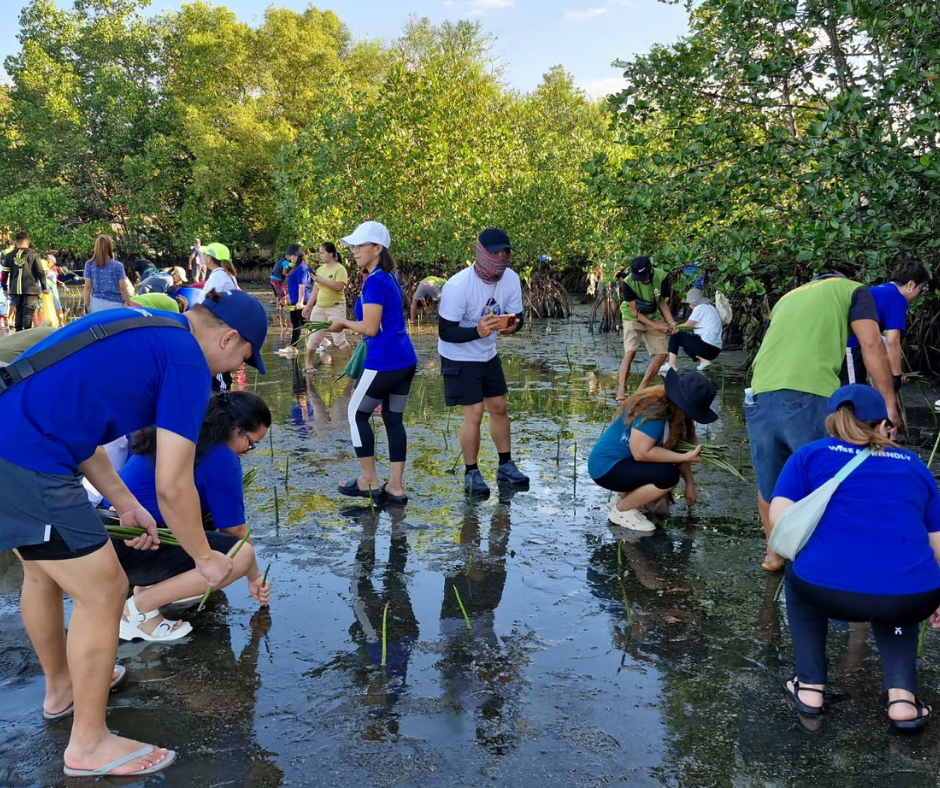
According to DENR Community Environment and Natural Resources Office–Masinloc Head Donaver Guevarra, more than 9,000 mangrove propagules were planted across an estimated one-hectare site. The species planted included Rhizophora apiculata and Rhizophora stylosa, chosen for their compatibility with the area’s soil and environmental conditions.
The activity drew support from the Barangay Local Government Unit of South Poblacion, Mother Rita Multi-Purpose Cooperative, Taltal National High School, and the DENR Protected Area Management Office, highlighting strong collaboration among government agencies, community groups, and institutional partners.
Guevarra welcomed the active participation of stakeholders, noting that such initiatives are essential in restoring coastal ecosystems and ensuring long-term environmental benefits for future generations.
DENR Regional Executive Director Ralph Pablo emphasized that mangrove rehabilitation remains a key strategy in addressing climate-related risks while preserving biodiversity. He added that sustained collaboration with local partners is crucial to achieving long-term environmental gains.
Established under Republic Act No. 11038, the MOBPLS is the first and only marine protected area in Central Luzon. It plays a significant role in biodiversity conservation and sustainable resource management.
The area is home to 33 mangrove species, including those from the Rhizophoraceae, Avicenniaceae, and Sonneratiaceae families, as well as the hybrid Rhizophora × lamarckii. These mangroves serve as natural barriers against storm surges and coastal erosion, provide nursery grounds for marine life, and contribute to carbon sequestration, helping mitigate climate change impacts. (PIA 3 | Rick P. Quiambao)