


Under Philippine laws, the primary culpability for defective or failed structures and site safety violations falls squarely on the contractors, a lawyer said today.
Atty. Simoun M. Salinas noted that the Civil Code provides that architects and contractors — not the building owners — are legally responsible for defects in design and construction.
“Constructing a building involved highly technical matters, and mostly or usually, owners do not have such a level of knowledge or experience,” he said.
“While the National Building Code serves to enforce uniform standards to protect property and public welfare, the specific legal shield for property owners against structural failure lies within the Civil Code of the Philippines,” added Salinas, who expressed his independent view following the filing of complaints against the owner and contractor of the collapsed building in Angeles City.
The May 24 incident resulted in the death of 30 people and triggered investigations by national agencies and the local government unit.
Salinas cited the landmark case of Nakpil vs. Court of Appeals (G.R. No. L-47851), which provided that liability falls under the purview of the contractors and architects.
“In the 1988 Resolution dismissing Nakpil’s Motion for Reconsideration (243 Phil. 489), the contractor tried to shift responsibility to the owner of the building, stating that it was the responsibility of the Philippine Bar Association (PBA) as the building owner, to ensure and provide active round-the-clock supervision as the owner of the structure,” he narrated.
“But the Supreme Court held that this position had no basis in law and fact, and was directly contrary to the ordinary practice that constructing a building involved highly technical matters, and beyond the ordinary experience of the owners.”
“Thus, the Supreme Court held that the trial court did not err in holding that charging the owner with full-time supervision of the construction has no legal or contractual basis,” Salinas said.
The lawyer mentioned Section 302 of the National Building Code, which requires that all building plans, specifications, and design computations be prepared, signed, and sealed by duly licensed architects and civil/structural engineers.
“This presents the property owner’s reliance on licensed professionals to build the structure. The law recognizes that an owner generally lacks technical expertise,” he said.
“Therefore, if the building suffers a structural failure or collapses due to design flaws or poor engineering, the civil liability shifts away from the owner and squarely onto the professionals via Article 1723 of the Civil Code. which acts in tandem with the Building Code,” he added.
Salinas also mentioned Sections 301 and 309 of the National Building Code, which require the securing of appropriate permits, such as the Building Permit and Certificate of Occupancy issued by the local building official.
He pointed out that compliance with these requirements serves as prima facie evidence that “the owner exercised the diligence of a good father of a family. It proves the state inspected the building and verified it met minimum safety standards, creating a robust shield against claims of gross or criminal negligence.”
“With that, if the owner can prove that it undertook all of the necessary obligations in securing the proper permits and licenses, and that he or she exercised proper and due diligence in selecting and hiring the contractor, etc then the owner has no liability under the law; the owner will not be liable criminally and civilly,” he said.
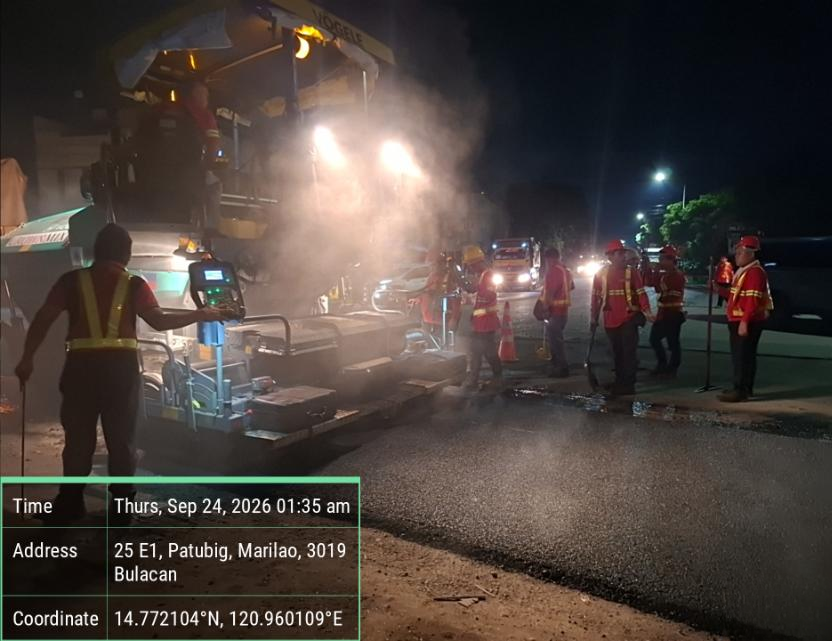
(AI-generated photo represents an activity in the construction of a structure.)
Reference: Atty. Simoun M. Salinas
(0917) 855 1755