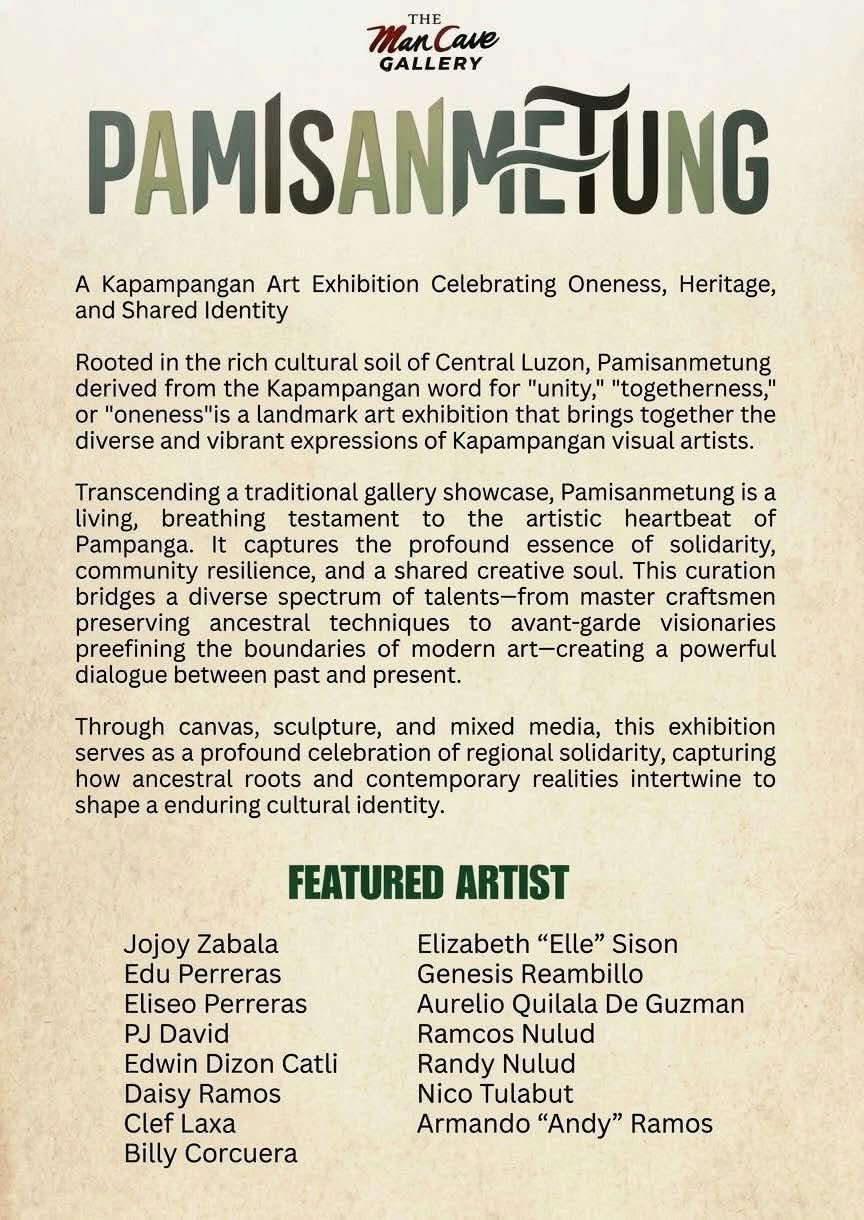
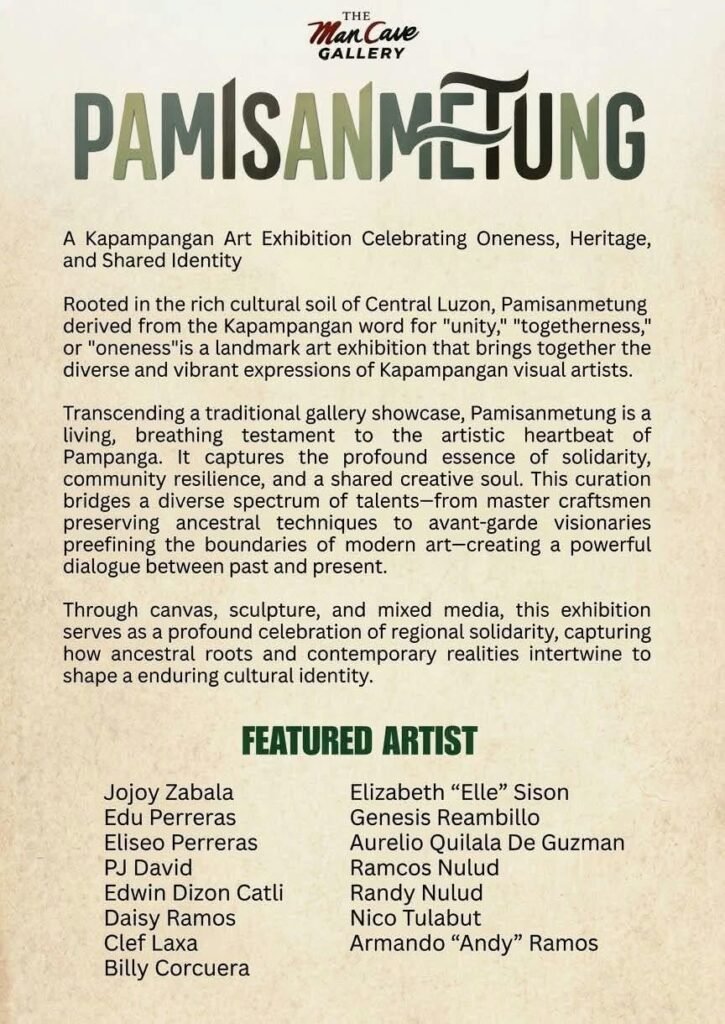
Art, heritage and a shared sense of identity took center stage as Pamisanmetung, a landmark Kapampangan art exhibition celebrating unity and togetherness, opened on October 3 at The Mancave Gallery.
Derived from the Kapampangan word for unity, togetherness, or oneness, Pamisanmetung brings together the distinct artistic voices of 15 Kapampangan artists in one collective celebration of the region’s rich cultural heritage: Jojoy Zabala, Edu Perreras, Eliseo Perreras, PJ David, Edwin Dizon Catli, Daisy Ramos, Clef Laxa, Billy Corcuera, Elizabeth “Elle” Sison, Genesis Reambillo, Aurelio Quilala De Guzman, Ramcos Nulud, Randy Nulud, Nico Tulabut, and Armando “Andy” Ramos.
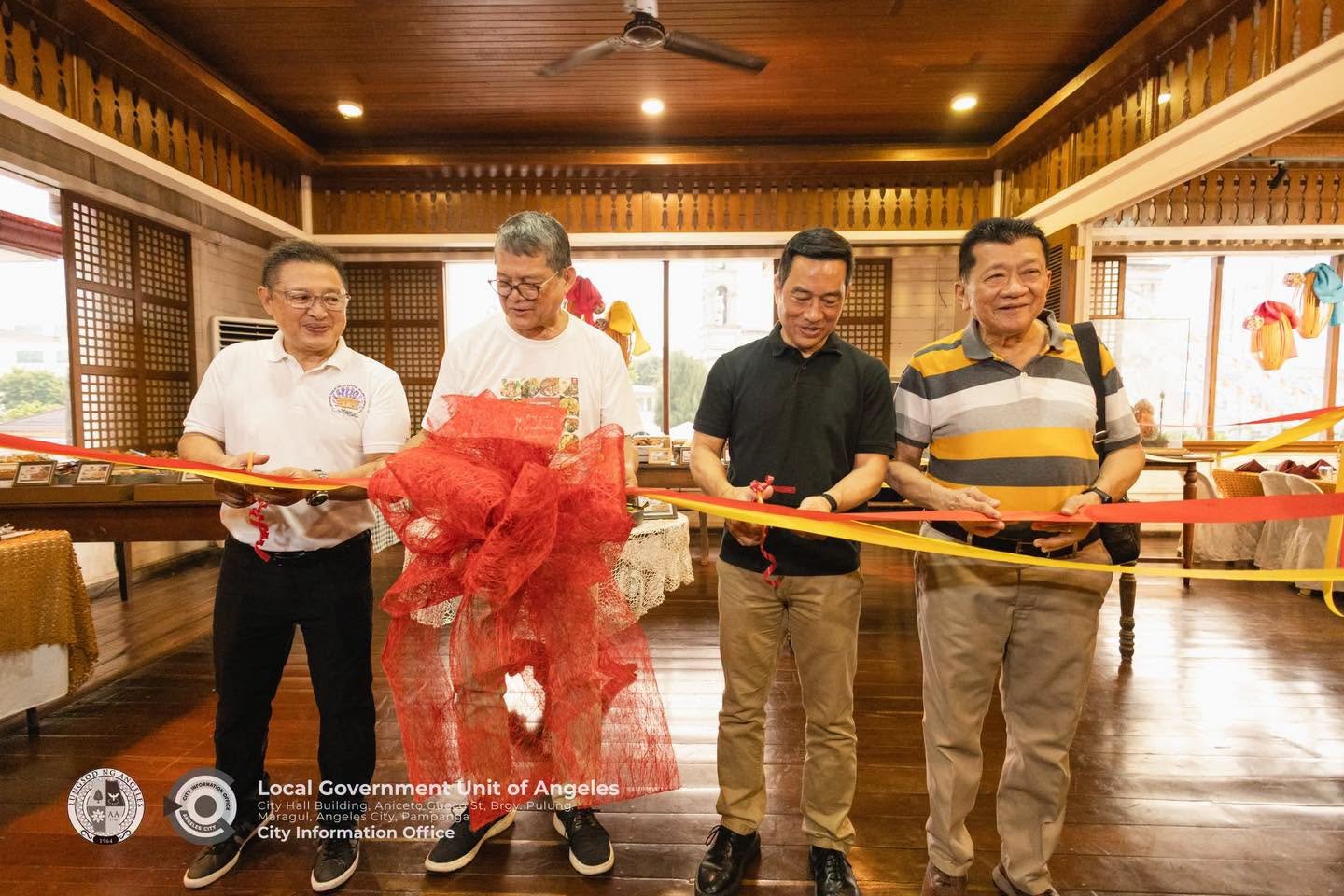
The exhibit was formally opened through a ribbon-cutting ceremony led by RTC Branch 49 Judge Regina Centenera Galang Guarin, joined by Kapampangan culture advocate Salf Carreon and The Mancave Gallery Director Manny Cabrera.
The event was also marked by the performance of musician Venzon Go.
Pamisanmetung presents art as a living expression of the Kapampangan spirit—one shaped by ancestral roots, community resilience, creativity and an enduring connection to place.
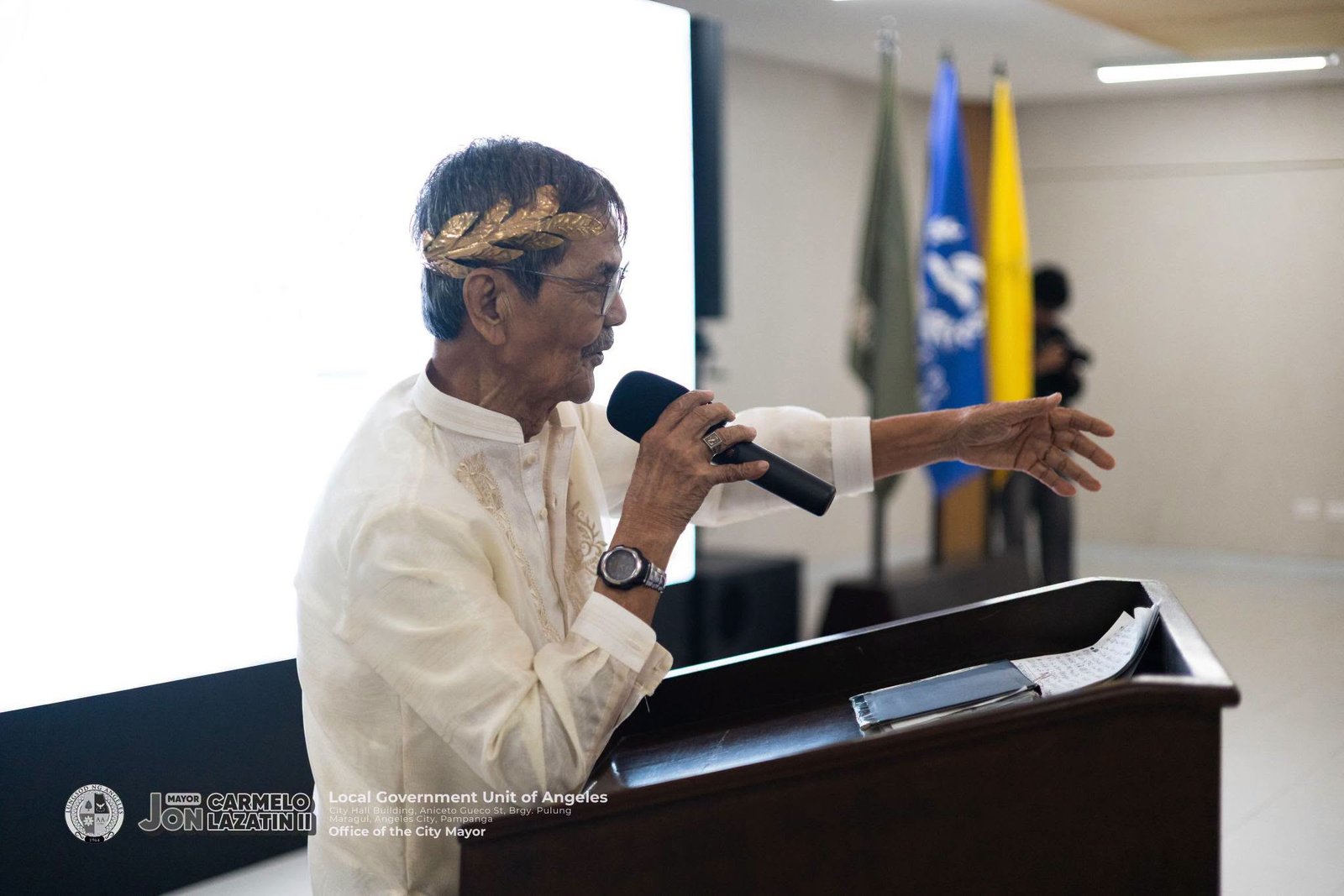
Nico Tulabut, vice president of the Gamat Kapampangan Art Group, described being part of Pamisanmetung as an honor and an opportunity to celebrate art, heritage and togetherness alongside fellow Kapampangan artists.
He called the exhibition a humble milestone and a reminder that “art is always better when we create together.”
That spirit lies at the heart of Pamisanmetung.
It is not simply a gathering of artworks inside a gallery. It is a gathering of stories, memories, traditions and visions—different artistic voices coming together to create one powerful cultural conversation.
At a time when traditions can easily be overshadowed by rapid change, Pamisanmetung affirms that heritage remains alive when it is continually interpreted, shared and created anew.
And in the coming together of these artists, Kapampangan art finds not only diversity, but oneness—a shared creative soul rooted in the land, culture and identity of Central Luzon.